The hiring process for any organization can make or break the recruitment and retention efforts for talented employees in a very competitive labor market and low levels of unemployment. Setting the tone with an inefficient or ineffective hiring process will impact the successes we have recruiting applicants into any organizations, regardless of benefits and perks being offered. Most people decide to stay or start looking for a new job within the first 60-days of employment. We should investigate the applicant’s qualifications, collect valid and useful data, avoid any stereotypes and hire legally. We should communicate and train supervisors and managers in our hiring processes, to ensure a consistent and effective method throughout the organization.
Questions and Inquiries Not to Ask:
You look so familiar to me. You sit behind me in church, right?
I can’t place your accent. What is it?
How are you feeling? When are you due? Do you have kids?
Are you married?
Do you have a disability?
Would you need a reasonable accommodation if you were offered this job?
How many sick days did you use last year?
Have you ever been on Workers’ Compensation?
Have you ever had a work-related injury?
What medications are you currently taking?
New York Labor Law Section 201-d:
This labor law prohibits employers from refusing to hire individuals because of lawful; off-duty recreational activities. What does this mean for our organizations? If you review social media or conduct Google searches on applicants prior to the making an offer, be aware of this law. Social media reviews or searches can lead to bias decision making.
Reference & Employment Checks:
Reference and employment checks can be an effective tool to use during the hiring process. Asking the applicant to sign a waiver prior to conducting reference and employment checks, can increase the information we can obtain during the process. The waiver provides a release of liability and claims for providing information about the applicant. I’m happy to draft waiver language for an employer.
Educational and Certification History:
A SHRM survey found that only half of employers verify candidate’s education credentials and 85% of others surveyed, reported uncovering a lie or misrepresentation on a candidate’s resume or job application. In my career, I have been involved in two cases of lying about degrees on a resume and job application. The one area I do not see employers check often is, certification active vs. in-active certification status or not renewed/no continuing education credit. With SHRM and HRCI credentials, certified professionals must recertify with continuing education credit every three-years. Many professional certifications have a similar process, we can and should review the active status of certifications, along with academic credentials.
Salary History:
Watch for changes in New York State on this law, it will impact most employers throughout the state, if not all. We will need to review our hiring process, job applications and communicate the changes to managers and supervisors. This will be a change to watch for at the end of 2019, start preparing now. Remember city and county specific requirements in this area.
“Ban the Box” Regulations:
New York City: Fair Chance Act; applies to employers with 4 or more employees, prohibits inquiring about or considering the criminal history of job applicants until after extending a conditional offer of employment
Buffalo: no criminal history inquires on initial job applications
Rochester: no criminal history inquiries until after initial job interview or conditional job offer.
Syracuse: no criminal history inquiries or background checks until after conditional job offer
Westchester: no criminal history inquiries until after application is submitted (includes job posting prohibition)
Criminal Background Checks New York Employers:
Post a copy of Article 23-A of the New York Corrections Law
Provide a copy of Article 23-A to a candidate if a background check report contains criminal information. Recommendation provide to the candidate before conducting the check.
We must also comply with the Fair Credit Reporting Act disclosures and notice requirements as well.
These are just a few thoughts on developing a legal and effective hiring process. As laws continue to change, so to should our hiring processes. Open communication, proactive feedback and follow-up is necessary for an effective process. Ask for feedback during the hiring process and make evolutionary changes to ensure a successful recruiting campaign.
New York Governor Kathy Hochul signed a bill on September 4, 2024 that requires retail employers to develop and implement workplace violence prevention training and policies, among other measures. The law becomes effective 180 days after her signature, or March 3, 2025.
The “Retail Worker Safety Act,” (the “Act”) applies to any person, entity, business, or company that has at least 10 employees working at a retail store. A “retail store” is defined as a store that sells consumer commodities at retail and is not primarily engaged in the sale of food for consumption on the premises. It requires covered employers to adopt a workplace violence prevention policy to be provided to all employees upon hire and annually thereafter.
The Act further requires covered employers to implement a workplace violence prevention training program and present it to their employees upon hire and annually thereafter.
Additionally, this law requires covered employers to provide panic buttons to their retail workers to be used in case of an emergency (more on this requirement below). (Littler)
Retailers With 10+ Employees
The act covers all employers with at least 10 retail employees who work at a retail store, which is defined broadly as “a store that sells consumer commodities at retail and which is not primarily engaged in the sale of food for consumption on the premises.”
Written Workplace Violence Prevention Policies – the act requires employers to assess potential workplace violence hazards and adopt written workplace violence prevention policies that address risk factors and prevention methods. Notably, the act requires the Department of Labor (“DOL”) to create and publish a model retail workplace violence prevention guidance document and retail workplace violence prevention policy. The model policy will:
Outline a list of factors or situations in the workplace that might place retail employees at risk of workplace violence, including, but not limited to:
Working late-night or early-morning hours;
Exchanging money with the public;
Working alone or in small numbers; and
Uncontrolled access to the workplace.
Outline methods that employers may use to prevent incidents of workplace violence, including, but not limited to, establishing and implementing reporting systems for incidents of workplace violence.
Include information concerning the federal and state statutory provisions concerning violence against retail workers and remedies available to victims of violence in the workplace and statement that applicable local laws may exist.
Clearly state that retaliation against individuals who complain of workplace violence or the presence of factors or situations in the workplace that might place retail employees at risk of workplace violence, or who testify or assist in any proceeding under the law, is unlawful.
Employers subject to the act are required to adopt the model policy or to implement their own policy that equals or exceeds the minimum standards set forth in the statute and the model policy. Accordingly, in the event an employer enacts a workplace violence prevention policy before the DOL issues its model policy, it is important that the policy satisfy these statutory elements.
Moreover, the workplace violence prevention policy must be provided to all employees in writing upon hire and annually thereafter.
Workplace Violence Prevention Training – the act mandates that employers conduct interactive workplace violence prevention training, a model of which will be published by the DOL. Employers subject to the act must utilize the model training or establish training that equals or exceeds the minimum standards provided by the model. Importantly, the training must be interactive and include, but not be limited to:
Information regarding the requirements of the act;
Examples of measures retail employees can use to protect themselves when faced with workplace violence from customers;
De-escalation tactics;
Active-shooter drills;
Emergency procedures;
Instructions on the use of security alarms, panic buttons, and other related emergency devices;
Supervisor conduct and additional responsibilities for supervisors to address workplace-specific emergency procedures; and
Identification of a site-specific list of emergency exits and meeting places in case of emergency.
The workplace violence prevention training must be provided upon hire and on an annual basis thereafter.
Written Notice – the act mandates that employers provide retail employees upon hire and at each annual training a written notice in English and in the language identified by each employee as their primary language (so long as the DOL has issued a model in that language). If the DOL has not issued a model in an employee’s primary language, the employer may provide an English-language notice.
These requirements are effective March 3, 2025.
Retailers With 500+ Employees
Effectively January 1, 2027, employers with 500 or more employees nationwide will be required to install panic buttons in their New York locations. Under the act, employers must either install buttons throughout their stores or provide wearable or mobile phone-based panic buttons to employees. If the employer chooses to utilize wearable or mobile phone-based panic buttons, the employer must provide such panic buttons to all retail employees. When activated, the button would alert the local 9-1-1 public safety answering point, relay the employee’s location, and dispatch local law enforcement to the site. (Lexicology)
Additional Recommendations
Employers take a close look at the DOL’s model policy and training and ensure that any training and policies adopted are complaint with this new law. One additional item to be aware of: the policy must be provided in the employee’s primary language
“The U.S. Department of Labor (DOL) released a final rule on Jan. 11 to raise its civil penalty amounts for legal violations to adjust for inflation. The new penalty amounts took effect on Jan. 15.
The federal Inflation Adjustment Act requires federal agencies to upgrade their monetary penalties based on inflation each year. The Consumer Price Index, a measure of inflation, rose 1.03 percent from October 2022 to October 2023, according to the U.S. Bureau of Labor Statistics. Thus, the DOL penalties will be multiplied by 1.03 percent and rounded to the nearest dollar. The new amounts will apply to any violation that occurred after March 23, 2018, with the penalty being assessed after Jan. 15, 2024.
The inflation correction applies broadly to a variety of federal employment laws. For example, under the Fair Labor Standards Act, the penalty for a child labor violation increased from $15,138 to $15,629.
Under the Family and Medical Leave Act, the penalty for violating the posting requirement jumped from $204 to $211.
The minimum penalty for a willful violation of the Occupational Safety and Health Act (OSH Act) rose from $11,162 to $11,524. The maximum penalties for serious and other-than-serious OSH Act violations increased from $15,625 per violation to $16,131 per violation. The maximum penalty for willful or repeated OSH Act violations increased from $156,259 per violation to $161,323 per violation.
Civil penalties are “often pushed into the background” and don’t get “sufficient emphasis,” compared with liquidated damages, said Eric Su, an attorney with Crowell & Moring in New York City. “Perhaps more-pronounced penalty amounts will get more attention.” (SHRM)
“In addition to the increasing number of posters employers are required to physically display, effective December 16, 2022, New York employers must now furnish all employees with digital copies of all required posters via email or by posting them on the employer’s website.
Section 201 of New York’s Labor Law requires employers to furnish employees with “copies or abstracts” of laws, rules, and orders, that are designated by the New York State Department of Labor (NYDOL) as affecting employees.
Traditionally, this obligation was satisfied by an employer posting the copies and abstracts “in a conspicuous place on each floor of the premises.” Indeed, the NYDOL’s guidance has previously indicated that furnishing required notices electronically only may not be sufficient for employers to satisfy their obligations under Section 201. The physical requirement piece of Section 201 has now been confirmed with the latest amendment.
On December 16, 2022, Governor Kathy Hochul signed into law an amendment to Section 201 that expanded the posting requirements. Employers must now:
Furnish digital versions of all copies and abstracts required under New York law or the NYDOL’s regulations to all employees through either the employer’s website or by email;
Furnish digital versions of all other documents required to be physically posted in the workplace pursuant to any state or federal law or regulation to all employees through either the employer’s website or by email; and
Provide notice to employees that all physically posted notices are available electronically.
The amendment language indicates that these new requirements do not substitute an employer’s obligations under New York or federal law to physically display postings in a conspicuous place in the workplace. Instead, the electronic furnishing of postings is an additional requirement for employers to satisfy.
Failure to comply with these new requirements can result in monetary fines. Additionally, non-compliance may be used as evidence to support other alleged workplace violations by an employer. (Fox Rothchild)
As many of our organizations have been implementing and utilizing remote worker options, we cannot forget the requirements for labor and employment law posters. Local, State and Federal laws have different requirements and definitions for remote workers.
Broad Definition of Remote Workers:
Works at home
Does not report to a physical job site
Is an employee
Other Considerations:
Independent Contractors: Organization is not required
Digital Nomads: Organization is not required
Gig Workers: Depends on payrolling of the individual
Temporary Workers: Depends on payrolling
Workers on site at customer’s office: If the customer’s office has posters, more than likely no, but you do want to work with the customer to ensure compliance.
General Posting Requirements:
Visible
Conspicuous Location
Readable
Not Defaced
Post Where Employees Report to Work Each Day
Remote Workers with Internet Access:
Internal website link
Conspicuously Displayed: Ensure it is easy to find on your intranet portal and not buried in folders.
Ensure workers are aware of how to access
Make remote workers aware of their rights
Can send them their own set of posters
Electronic posters = best practice
Still need paper posters at main office and other locations
EEOC: In most cases, electronic posting supplements physical posting but does not itself fulfill the employer’s basic obligation to physically post the required information in its workplaces.
The majority of the agencies, laws and regulations were written prior to the remote work became a popular model for organizations to implement. However, there are a few federal and state laws that have implemented electronic posting language.
USERRA Notice: May be posted or distributed in other ways.
FMLA Notice: May be distributed electronically if all other requirements are met.
EEOC: employers are encouraged to post the electronic notice on their internal websites in a conspicuous location
Colorado Paid Leave, Whistleblowing & PPE: Provide through electronic communication, or conspicuous posting in the web-based platform
FFCRA: An employer may also directly mail the required notice to any employees who are not able to access information at the worksite, through email, or online.
Informs employees of their rights under the National Labor Relations Act to form, join, and support a union and to bargain collectively with their employer
Must be posted in English and any language common to a significant portion of workers if they are not fluent in English
Posting requirement does not apply to contracts of less than $100,000
Enforced by the U.S. Department of Labor – Office of Labor-Management Standards and Office of Federal Contract Compliance Programs
There has been some confusion recently on whether this is a required poster. The National Labor Relations Board previously required private employers to post a similar notice, but a recent case has put that requirement on hold until further notice. That decision has no impact on federal contractors who are still required to post this poster.
Walsh-Healey Public Contracts Act/Service Contract Act
Notifies employees of the minimum wage rate, overtime requirements and safety and health requirements
Must be posted by federal contractors and subcontractors with contracts in excess of $10,000 for the manufacturing or furnishing of materials, supplies, and equipment to the federal government or federal contractors who provide services to the federal government using service employees whose contract exceeds $2,500
Enforced by the U.S. Department of Labor – Employment Standards Administration – Wage and Hour Division
American Recovery and Reinvestment Act (ARRA) Whistleblower Rights
Informs employees of their whistleblower rights under the American Recovery and Reinvestment Act
Must be posted by federal contractors who received funds under the ARRA
Enforced by the Recovery Accountability and Transparency Board
Department of Defense (DOD) Fraud Hotline
Informs employees of the Department of Defense Fraud Hotline number for reporting fraud, waste and abuse
Must be posted by federal contractors who have contracts with the Department of Defense that exceed $5,000,000
Enforced by the U.S. Department of Defense
Department of Defense (DOD) Whistleblower Hotline
Informs employees of their whistleblower rights
Must be posted by federal contractors who have contracts with the Department of Defense that exceed $5,000,000
Enforced by the U.S. Department of Defense
Department of Homeland Security (DHS) Fraud Hotline
Informs employees of the Department of Homeland Security Hotline number for reporting suspected criminal violations, misconduct and wasteful activities
Must be posted by federal contractors who have contracts with the Department of Defense that exceed $5,000,000 and if the DOD contract is funded, in whole or in part, by DHS disaster relief funds
Enforced by the U.S. Department of Homeland Security – Office of the Inspector General
Notice to Workers with Disabilities/Special Minimum Wage
Informs employees the conditions under which special minimum wages may be paid
Must be posted by federal contractors who employ disabled employees paid at a special minimum wage
Enforced by the U.S. Department of Labor – Employment Standards Administration – Wage and Hour Division
E-Verify
Notifies applicant and employees of their rights under the E-Verify program
Must be posted by federal contractors in English and Spanish and posted near entrance
Enforced by the U.S. Department of Homeland Security
Right to Work
Notifies applicants and employees of their discrimination rights under the E-Verify program
Must be posted by federal contractors in English and Spanish and posted near entrance
Enforced by the U.S. Department of Homeland Security 2
Federal Contractor Minimum Wage
Informs employees of the federal minimum wage for contractors
Must be posted by federal contractors and subcontractors that have FLSA-covered workers performing work in connection with a covered Service Contract Act or Davis-Bacon Act contract, as well as those with concessions contracts or contracts offering services to federal employees or the public on federal property
Enforced by the U.S. Department of Labor – Employment Standards Administration – Wage and Hour Division
“EEO is the Law” Supplement
Informs applicants and employees of federal nondiscrimination laws and procedures for filling complaints with the Office of Federal Contract Compliance Programs
Must be posted by federal contractors and subcontractors with contracts in excess of $10,000
Enforced by the U.S. Department of Labor – Office of Federal Contract Compliance Programs
Pay Transparency Policy Statement
Informs applicants and employees of their pay transparency rights
Must be posted by federal contractors and subcontractors with contracts in excess of $10,000
Enforced by the U.S. Department of Labor – Office of Federal Contractor Compliance Programs
Federal Contractor Paid Sick Leave
Informs employees of their paid sick leave rights
Must be posted by federal contractors and subcontractors that have FLSA-covered workers performing work in connection with a covered Service Contract Act or Davis-Bacon Act contract, as well as those with concessions contracts or contracts offering services to federal employees or the public on federal property
Enforced by the U.S. Department of Labor – Employment Standards Administration
Davis-Bacon Act
Notifies employees of prevailing wage requirements and overtime pay under the Davis-Bacon Act
Must be posted by federal contractors and subcontractors performing on federally funded construction projects in excess of $2,000 for the actual construction, alteration/repair of public buildings or public works
Enforced by the U.S. Department of Labor – Employment Standards Administration – Wage and Hour Division
Department of Transportation (DOT) Federal Highway Construction
Informs employees to report any false statement, false reports or false claims made to the character, quality, quantity, or cost of any work performed on the contract
Must be posted by federal contractors who work on federally funded highway construction projects
Enforced by the U.S. Department of Transportation” (Poster Guard)
New York State Paid Sick & Safe Leave Section Addition:
Effective January 1, 2025, in addition to New York State Paid Sick Leave, employees will be provided 20 hours of paid prenatal personal leave each year in addition to the existing statutory paid sick leave entitlement.
Amount of Leave: 20 hours of PPPL during any 52 week calendar period.
Covered Reasons for Use: For employees to receive health care services during their pregnancy or related to such pregnancy, including physical examinations, medical procedures, monitoring and testing, and discussions with a health care provider related to pregnancy.
Increments of Use: PPPL may be taken in hourly increments.
Continue to review for additional updates from New York State prior to 2025.
Lactation Policy for New York State (Burr Recommendation):
Effective June 19, 2024, the organization will provide an additional paid 30-minute break along with existing paid break time and unpaid meal time, for the employee to express breast milk at work. Employees may take such paid break time for up to three years following childbirth.
“COVID-19 Leave Sunset Date: Currently, the New York State COVID-19 Emergency Leave Law provides employees with paid COVID-19 leave when subject to a mandatory or precautionary order of quarantine or isolation due to COVID-19. The amount of paid time off to which employees are entitled under this mandate has recently changed in light of the CDC ending its recommended five-day isolation period following a positive COVID-19 test. For additional information on New York COVID-19 paid sick leave entitlements, please see our prior alerts here and here.
Importantly, the NYS 2025 Budget set the sunset date for New York State COVID-19 leave as July 31, 2025. After this date, COVID-19 leave under the Emergency Leave Law will no longer be available. Employees may continue to use other qualifying paid leave, such as New York Paid Sick Leave, for COVID-19-related reasons.” (https://www.jdsupra.com/legalnews/sunrise-sunset-new-york-state-2025-1826423)
Additional Considerations
Originally Published January 9, 2024
1. New York State Sexual Harassment Policy
The state released a revised policy in April 2023, all employers should update and train with the new policy. Do not forget to include the complaint form.
2. Update Paid Sick Leave Policies for Higher Accrual Requirements, Carryovers, and Caps
If you are not subject to a local paid sick leave law, you should update your paid sick leave policy to reflect that employees must now receive five days or 40 hours of paid sick leave per year.
3. Attendance Policies
No fault attendance laws and regulations should be considered when drafting, implementing and enforcing an attendance policy
4. Electronic Monitoring
Don’t forget to include the posting and communicate this policy to all employees.
5. New York State Paid Family Leave
This law evolved in January 2023, to include new relatives covered under the leave law.
6. Review Policies for Interference With the National Labor Relations Act (“NLRA”)
With the National Labor Relations Board (“NLRB”) taking an aggressive stance against potential infringement of employee rights under Section 7 of the NLRA, employers should review their standards of conduct policies, confidentiality policies and social media policies, in particular. Consider removal of language impeding employees’ off-duty, lawful conduct. Consider restricting only limited categories of speech, for example, hate speech, incitements to violence, and disclosure of trade secrets in the social media policy. Consider also including NLRA disclosures that handbook policies are not intended to limit employees’ lawful, off-duty conduct or to infringe their right to discuss the terms and conditions of their employment. Generally, the NLRB considers one NLRA savings clause to broadly cover the whole handbook insufficient. (JD SUPRA)
Compensation Philosophy & Wage Transparency
This should be reviewed to ensure internal pay equity policies and wage transparency compliance.
8. Ensure Your Pregnancy Accommodations Policy complies with the Pregnant Workers Fairness Act & State Specific Laws and regulations.
New York State rolled out a draft policy for all employers to implement, ensure that your organization policy is compliant with both state and federal laws.
Review these policies and procedures and make changes as needed.
State & Local Leave Laws
Ensure compliance with all state and local laws related to leave requirements, paid and unpaid; voting, military, blood donor, PFL, sick, etc.
Drug & Alcohol Testing and Drug Free Workplace
The evolving laws on recreational and medicinal marijuana will require policies and procedures to evolve. Review all state and local laws prior to updating, along with DOT.
This is a very high-level list of potential changes to employee handbooks and manuals. I’m happy to review and update any handbooks, policy, and procedure manuals. Ensure that all languages are up-to-date and legally compliant. After completion we need to communicate and train the workforce and verify receipt with a signature.
The 2023 EEO-1 Component 1 data collection will open on Tuesday, April 30, 2024. The deadline to file the 2023 EEO-1 Component 1 report is Tuesday, June 4, 2024.
The EEO-1 Component 1 online Filer Support Message Center (i.e., filer help desk) will also be available on Tuesday, April 30, 2024, to assist filers with any questions they may have regarding the 2023 collection.
All updates about the 2023 EEO-1 Component 1 data collection, including the 2023 EEO-1 Component 1 Instruction Booklet and the 2023 EEO-1 Component 1 Data File Upload Specifications, will be posted to www.eeocdata.org/eeo1 as they become available. The EEOC anticipates posting the 2023 EEO-1 Component 1 Instruction Booklet and the 2023 Data File Upload Specifications by Tuesday, March 19, 2024.
The EEO-1 Component 1 report is a mandatory annual data collection that requires all private sector employers with 100 or more employees, and federal contractors with 50 or more employees meeting certain criteria, to submit workforce demographic data, including data by job category and sex and race or ethnicity, to the EEOC. The authorities under which EEO-1 Component 1 data are collected include: Section 709(c) of Title VII of the Civil Rights Act of 1964, as amended, 42 U.S.C. 2000e, et seq., and Sections 1602.7-1602.14, Chapter XIV, Title 29 of the Code of Federal Regulations (CFR); Exec. Order No. 11246, 30 FR 12319 (Sept. 24, 1965) and 40 CFR 60-1.7(a).
“Before we dive in with your five-step strategy plan, here is a one-stop shop with all the resources you’ll need to master this year’s EEO-1 season.
As announced this week, the 2023 EEO-1 Component 1 data collection window will open on Tuesday, April 30. The deadline to file is Tuesday, June 4.
The EEOC anticipates posting the 2023 EEO-1 Component 1 Instruction Booklet and the 2023 Data File Upload Specifications by March 19. We’ll add links here once those are posted.
The EEOC’s EEO-1 Component 1 online Filer Support Message Center(which serves as its filer help desk) will open on April 30 to assist you with any questions you may have. We’ll add a link once that center is active.
Your 5-Step Strategy Plan
1. Pick a Date
Traditionally, EEO-1 reports require employers to pick a payroll end date between October 1, 2023, and December 31, 2023, as your “workforce snapshot period.” This will become the basis of reporting all employees as of that date. New for this reporting cycle, the EEOC has said that you will need to file an EEO-1 report if you reached 100 or more employees during any point of the fourth quarter of 2023.
2. Categorize Your Workforce
Next, ensure that your job titles are categorized correctly and consistently. The EEO job categories are:
(1.1) Executive/Senior-level officials and managers
(1.2) First/Mid-level officials and managers
(2) Professionals
(3) Technicians
(4) Sales workers
(5) Administrative support workers
(6) Craft workers
(7) Operatives
(8) Laborers and helpers
(9) Service workers
3. Let Your Employees Choose
Give your employees an opportunity to self-identify their sex and race/ethnicity and provide a statement about the voluntary nature of the inquiry.
The race/ethnicity categories are unchanged:
Hispanic or Latino: A person of Cuban, Mexican, Puerto Rican, South or Central American, or other Spanish culture or origin regardless of race.
White (Not Hispanic or Latino):A person having origins in any of the original peoples of Europe, the Middle East, or North Africa.
Black or African American (Not Hispanic or Latino):A person having origins in any of the black racial groups of Africa.
Native Hawaiian or Other Pacific Islander (Not Hispanic or Latino):A person having origins in any of the peoples of Hawaii, Guam, Samoa, or other Pacific Islands.
Asian (Not Hispanic or Latino):A person having origins in any of the original peoples of the Far East, Southeast Asia, or the Indian Subcontinent, including for example, Cambodia, China, India, Japan, Korea, Malaysia, Pakistan, the Philippine Islands, Thailand, and Vietnam.
American Indian or Alaska Native (Not Hispanic or Latino):A person having origins in any of the original peoples of North and South America (including Central America) and who maintains tribal affiliation or community attachment.
Two or More Races (Not Hispanic or Latino): All persons who identify with more than one of the above five races.
Under last year’s filing instructions, only binary options for reporting sex are available in the EEO-1 reporting form. However, employers could voluntarily choose to report employee demographic data for non-binary employees in the comments section of the report. Employers that voluntarily choose to report non-binary employees in the comments section should not assign such employees to the male or female categories or any other categories (job category and race/ethnicity) within the report. We anticipate similar instructions this year but will update this Insight if something changes.
4. Choose a Point of Contact
Designate an employee as the “account holder” who will file the EEO-1 report through the EEO-1 Component 1 Online Filing System (OFS). Note that there are separate instructions for new filers and for those who are changing their point of contact. Account holders must submit the workforce demographic data electronically in the OFS through either manual data entry or data file upload. The employer’s certifying official must then certify the EEO-1 Component 1 report(s) in the OFS.
5. File on Time!
File by June 4, 2024 – or earlier! In the past, the EEO-1 reporting system has slowed down significantly as the deadline approached, which makes filing more challenging. You might want to allow yourself sufficient time before the deadline, so you aren’t scrambling at the last minute with technical challenges. Typically, the EEOC does not provide for extensions.” (JD Supra)
Who Is Required to File EEO-1 Reports?
The EEOC and the U.S. Department of Labor Office of Federal Contract Compliance Programs (OFCCP) regulations require eligible employers to file Standard Form 100 (EEO-1 reports) annually through the EEOC’s dedicated website for EEO-1 Component 1 data collection at www.eeocdata.org/eeo1. The filing of EEO-1 reports is mandatory and not voluntary for “eligible” employers under federal regulations. Those employers covered by the EEO-1 reporting requirement must summarize their workforce’s demographics by race/ethnicity, sex, and job categories.
Employers who are required to file EEO-1 reports include:
Private-sector employers that are subject to Title VII of the Civil Rights Act of 1964 (Title VII) and have 100 or more employees.
Employers subject to Title VII with fewer than 100 employees if the employer is affiliated with another company so as to be considered legally as a single enterprise employing a total of 100 or more employees; and
Certain federal contractors employing 50 or more employees.
What Type of Data Is Required for the EEO-1 Component 1 Report?
An EEO-1 report provides the EEOC with a snapshot of a covered employer’s workforce during a specific payroll period of the applicable year. Employers are required to gather this information from company records and employment documents completed by their employees and enter and/or upload this information through the EEOC’s EEO-1 Online Filing System (OFS). Through the OFS, employers are able to enter and/or update company information; file or upload workforce demographic data either by entering the data into the OFS or uploading a data file using an approved EEOC template; enter any remarks or explanations regarding the report; and certify the accuracy of the information entered through OFS.
The Categories for Workforce Data
According to the EEOC, employee self-identification, especially as to race and ethnicity information, is ideal. However, where an employee declines to self-identify, employment records or observer identification may be used instead. The EEOC has a designated list of race and ethnicity categories that employers should be mindful of when collecting this information from their workforce. The categories include:
Hispanic or Latino
White
Black or African American
Asian
American Indian or Alaska Native
Two or More Races
Employers are also required to provide gender/sex data by an employee’s job category. Although the EEOC added an “X” gender marker as a component of the charge intake process last year, there is no current equivalent for EEO-1 reporting of non-binary individuals. Employers who seek to include this information can do so using the remarks section of the EEO-1 report. Employers are required to retain a copy of the most recent EEO-1 report filed at each reporting unit in the event the EEOC requests this information from the employer.
EEO-1 Reporting Obligation
Businesses with 100 or more employees and some federal contractors with at least 50 employees must submit an annual EEO-1 form, which asks for information from the previous year about the number of employees who worked for the business, sorted by job category, race, ethnicity and gender.
The EEOC also announced the discontinuation of the use of Type 6 reports for multi-establishment employers. Type 6 reports allowed these employers to report only the total number of employees at an establishment with fewer than 50 employees, instead of providing demographic data by EEO-1 category for each location.
Single-Establishment vs. Multi-Establishment Filing
Single-establishment companies are required to submit only one EEO-1 Component 1 data report. Multi-establishment companies must submit:
A report for the headquarters.
A report for each establishment of the company with 50 or more employees.
A report for each establishment with fewer than 50 employees. The Type 8 establishment report, as it’s called, must include employee data for each establishment broken down by job category, race, ethnicity and gender.
A consolidated report that includes all employees.
What companies are required to file the EEO-1 report?
A: All companies that meet the following criteria are required to file the EEO-1 report annually:
Subject to Title VII of the Civil Rights Act of 1964, as amended, with 100 or more employees; or
Subject to Title VII of the Civil Rights Act of 1964, as amended, with fewer than 100 employees if the company is owned by or corporately affiliated with another company and the entire enterprise employs a total of 100 or more employees: or
Federal government prime contractors or first-tier subcontractors subject to Executive Order 11246, as amended, with 50 or more employees and a prime contract or first-tier subcontract amounting to $50,000 or more.
Do I need to file if my company has fewer than 50 employees but does have a federal government contract worth $50,000 or more?
A: No, your company must meet both requirements of 50 employees and the government contract worth $50,000 or more.
Download the “EEO is the Law” Poster in English (including a screen-readable electronic version), Spanish, Arabic, and Chinese Employers are required to post a notice describing the federal employment discrimination laws.
EEO Reports/Surveys Employers who have at least 100 employees and federal contractors who have at least 50 employees are required to complete and submit anEEO-1 Report(a government form that requests information about employees’ job categories, ethnicity, race, and gender) to EEOC and the U.S. Department of Labor every year.
The Equal Employment Opportunity Commission (EEOC) is the federal agency that can and will investigate sexual harassment allegations, along with other discriminatory allegations made against an organization, supervisors, managers or employees. An individual can file a complaint with the EEOC anytime within 300 days from the alleged sexual harassment or discriminatory allegation, as defined by the federal law. As outlined in the NYS Sexual Harassment training slides, the individual does not need an attorney to file and the individual must file the complaint with the EEOC prior to filing in federal court. What does the EEOC look for in a sexual harassment allegation against an organization or the employees in the organization? How have they defined severe and pervasive? Can this change? Yes, and it can change quick during the #MeToo environment.
Convincing a fact-finder:
Severe or Pervasive: enough to create a work environment that a reasonable person would consider intimidating, hostile, or abusive.
Unwelcomed: individual has to prove to the fact-finder the conduct was unwarranted and unwelcome.
Rendered the plaintiff’s working environment both objectively and subjectively hostile/abusive.
Courts Defining Severe or Pervasive:
The level of offensiveness of the unwelcomed speech or conduct.
The frequency of occurrence of such conduct or speech.
Length of time over which the alleged harassment occurred.
The context in which the challenged conduct occurred.
A complaint alleging violation of the Human Rights Law may be filed either with DHR or in NYS Supreme Court. Complaints may be filed with DHR any time within one year of the alleged sexual harassment, no attorney needed to file. Filing in the NYS Supreme Court can occur any time within three years.
“Although the Human Rights Law applies generally to employers with four or more employees, the sexual harassment provisions apply to ALL employers in New York State, regardless of the number of employees. Sexual Harassment in the Workplace Sexually harassing conduct can consist of unwanted verbal or physical sexual advances, sexually explicit statements, or discriminatory remarks that are offensive or objectionable to the recipient.
Examples include:
Requests for sexual favors, which may be accompanied by implied or overt threats concerning one’s job performance evaluation or promotion.
Subtle or obvious pressure for unwelcome sexual activities.
Verbal harassment or abuse in the form of a pattern of sexual comments or questions.
Unnecessary or inappropriate physical contact.
Displays of lewd photographs or drawings.
Unwelcome sexual advances, requests for sexual favors, and other verbal or physical conduct of a sexual nature constitute unlawful sexual harassment when:
Submission to such conduct is made (either explicitly or implicitly) a term or condition of employment;
Submission to, or rejection, of such conduct is used as a basis for decisions affecting one’s employment; or
Such conduct has the purpose or effect of interfering with an individual’s work performance, or creating an intimidating, hostile or offensive working environment.”[i]
A bill has been introduced in the NYS Legislature that would add language to the Human Rights Law which includes; “Harassment is not limited only to those actions that are severe or pervasive.” The law currently reads, “Harassment includes the types of actions that have been found by the courts to create a hostile environment or a tangible job detriment. Such actions are an unlawful discriminatory practice when they result in a person or persons being treated not as well as others because of a protected characteristic. Harassment does not include what a reasonable person with the same protected characteristic would consider petty slights or trivial inconveniences.” A broad expansion to the law has the potential of expanding what harassment and sexual harassment how the state and court system define workplace harassment. Continue to monitor for any changes and updates to this legislation, it will impact all organizations throughout the state.
*This can include retaliation on other protected categories under Title VII
Work for trade agreements is an opportunity to exchange work for something of value to someone else. A yoga instructor exchanging yoga lessons for assistance at the front desk reception. Also known as bartering; exchanging service for another service or something of value to the individual.
The Work for Trade Agreements are potential solutions for small businesses and organizations that have limited budget. However, precautions should be considered prior to setting up any work for trade agreement.
Additional Considerations:
Local, State and Federal Tax considerations. Is the exchange taxable? More than likely yes, but this should be reviewed as well.
Work for Trade Contract. Do we have a written and enforceable contract?
Local, State and Federal Laws. How will this impact the FLSA, DOL, OSHA, etc. at the federal level and is there an impact at the local or state level? It is worth reviewing to ensure the agreement does not violate any laws.
Value on both sides. Are both parties agreeing the value of one in exchange for the value of another is fair?
Work for Trade will not work for every organization, these are just a few considerations, and all aspects should be reviewed prior to implementing a Work for Trade Agreement.
IRS Rules Bartering for Service:
Bartering is the exchange of goods or services. A barter exchange is an organization whose members contract with each other (or with the barter exchange) to exchange property or services. The term doesn’t include arrangements that provide solely for the informal exchange of similar services on a noncommercial basis (for example, a babysitting cooperative run by neighborhood parents). Usually there’s no exchange of cash. An example of bartering is a plumber exchanging plumbing services for the dental services of a dentist.
It is advised to seek legal and CPA/financial guidance to ensure everything is done legally. FLSA guidelines should be reviewed prior to making any decisions. This is business to business.
Below is a draft contract (not considered legal advice):
This agreement is hereby made and entered on this date, date, by and between:
Contractor Name, of Contractor Company, hereafter called Contractor,
and
Client Name, of Client Organization, hereafter called Client.
The said parties, for the considerations hereinafter mentioned, hereby agree to the following:
The Contractor agrees to provide labor required to perform the work as described:
Contractor Services Provided in exchange for the following:
Client Offering
under the following conditions:
Conditions of exchange
Contractor agrees to keep records of hours worked and the records will be available for review by Client. Client agrees to reimburse Contractor for expenses agreed between the Client and Contractor, in order to complete necessary work as required.
The Contractor agrees to complete work at the best of their experience and skills and to consult with the Contractor regularly to complete work according to the following time frame conditions:
Agreement timeline
Contract to be on a month to month basis. Either party shall provide one week’s notice for termination or amendment of the agreement.
Meal and rest (break) periods continue to be a question in the workplace. These laws can be confusing, based on shift start and hours worked. Certain states’ statues or regulations remain silent on defining meal and break periods, which means they follow federal guidelines. However, New York State has unique laws and regulations on meal and rest periods. Regardless of the laws, organizations should err on the side of caution and provide breaks that are most beneficial to the employee. Breaks and rest periods are good for both the individual and employer. Set the time for breaks and lunches and hold employees accountable to follow the guidelines on meal and rest periods.
The 4 meal and rest requirements in New York State[i]:
The New York State Department of Labor (“NYSDOL”) can issue a permit allowing shorter fixed meal periods. Such a permit must be in writing and conspicuously posted in the main entrance of the establishment. The NYSDOL can revoke the permit at any time.
The NYSDOL can also permit shorter meal periods without an application by the employer if this shorter break does not create a hardship for employees. Such breaks cannot be shorter than 30 minutes.
The NYSDOL can also issue special permits for shorter meal periods after investigating special or unusual cases, but these meal periods cannot be shorter than 20 minutes.
One-Employee Shift Exception
Section 162 contains a one-employee shift exception where it is permissible for an employee to eat on the job if he or she has voluntarily consented to this arrangement. To obtain an employee’s voluntary consent, the employer must explain to the employee that (1) the nature of the employer’s industry necessitates one-employee shifts, and (2) the employee’s meal periods may be interrupted. The employer must obtain an acknowledgment from the employee, preferably in writing, either when the employee is hired or before the employee would be expected to give up his or her uninterrupted meal periods.
If an employee works through a meal period due to the one-employee shift exception, the employee must be paid for that meal period. Also, the employee must be given an uninterrupted meal period upon request.
Brown Bag Lunches
Some employers host brown bag lunches where employees eat their lunches while listening to a speaker or presentation. If employers require employees to attend brown bag lunches, this does not count as a meal period and must be counted as time worked. On the other hand, if employees voluntarily choose to attend these brown bag lunch events, they are considered to have received a proper period under the law.
Skipping Meal Periods
New York employees may waive their rights to a meal period if there is a collective bargaining agreement. The collective bargaining agreement must provide for a waiver of statutory meal periods in exchange for additional breaks or meal periods that are scheduled at other times. The waiver must include that the operational needs of the industry make it impractical to strictly comply with the meal periods. The waiver must also indicate that it was obtained openly and knowingly without duress or coercion through good faith negotiations.
Rest Periods
Rest Breaks
Rest breaks are short in duration, running from 5 minutes to about 20 minutes. Rest breaks such as coffee or snack breaks are different from meal periods. Unlike meal periods, New York employers are not required to offer rest breaks.
New York employers who do offer rest breaks must consider the time taken for rest breaks as compensable. This time for rest breaks would be included in the sum of hours worked and considered in determining whether the employee worked overtime.
Rest Days
Under Section 161 of the New York State Labor Law, certain New York employees must be provided with at least 24 consecutive hours of rest in any calendar week. This day of rest requirement applies to certain occupations and industries as set forth in Section 161 that require continuous work, such as mercantile establishments, factories, hotels, and restaurants.
Employers must designate this day of rest for each employee and notify employees in advance of their day of rest before operating on Sunday. Employees are not permitted to work on their designated day of rest. Employers are required to maintain a time book that shows the names and addresses of employees and the hours worked by them each day.
Employers may apply for a variance from the day of rest requirement if there are practical difficulties or unnecessary hardships in fulfilling the requirement. However, the variance will be granted only if the employer agrees to certain conditions and the application is approved.”
It is the policy of [Company Name] to comply with state and federal laws regarding meals and breaks.
Rest periods
All employees are permitted a 15-minute paid rest break for each four-hour work period. Breaks are not permitted at either the beginning or end of the workday to offset arrival and departure times. Employees who voluntarily work through their rest breaks will not be paid additional compensation.
Meal periods
All employees who work eight or more hours in a day are required to take an unpaid meal break of 30 minutes. Meal breaks are not counted toward hours worked.
Employees are to be completely relieved from duty during their meal break. If a nonexempt employee is required to perform any work duties while on his or her meal break period, the employee must be compensated for the time spent performing work duties. The time spent working during the meal break will be counted toward the total hours worked.
Enforcement
Managers are responsible for the scheduling of meal and rest periods. Employees who fail to return on time from breaks or lunch will be subject to disciplinary action and docking of pay for time missed.
[i] Meal and Rest Break Requirements by State, SHRM, Michael Cardman
Employee Assistance Programs have evolved to address issues that could have the biggest impact on employee performance. An EAP is typically a separate benefit offered by an employer to help employees navigate short-term issues that may distress or distract them from work. For example, EAP counseling sessions may address issues such as work-related worries, formal mental health or substance use disorders, relationship issues, and other things that could affect well-being and productivity using problem assessment, short-term counseling, and referrals for additional services.
An EAP typically includes some combination of the following resources:
Short-term counseling: Limited number of sessions with a counselor to help staff members deal with immediate issues. The counselor might also make use of this time to refer employees to additional services, such as substance abuse support groups
Financial counseling: Resources for employees to handle debt, manage their budgets, etc.
Legal services: Free or discounted legal representation for bankruptcy, divorce, and other issues or referrals to legal resources
Adoption assistance: Free legal and financial support through adoption aid or referrals to adoption agencies
Child and elder care services: Resources and support for caregivers in the areas of child and elder care
Substance abuse referral services: Short-term counseling and group support services for employees who are struggling with substance abuse
Workplace trauma counseling: Support for employees experiencing trauma following acts of workplace violence.
Education and training: Classes, webinars, videos, and other resources covering stress management, mindfulness, resiliency, conflict management, etc.
Typically, an EAP provides a limited number of counseling sessions at no cost to the employees. A sample EAP benefit may offer three to 10 no-cost visits (per year), either in person, virtually, or a combination of both. If the issue is not resolved in the number of counseling visits offered, employees may then transition to behavioral health benefits (explained below). Therefore, it’s a good idea to consider EAP benefits as a first option since it does not require fees or filing claims paperwork.
Behavioral Health Programs versus EAPs: What’s the Difference?
Employers can add behavioral health programs as an extra benefit on top of traditional EAP. Alternatively, some behavioral health programs can include EAP as part of their offering.
The main difference between an EAP mental health benefit and a behavioral health program is how they approach addressing issues. An EAP program focuses on external stressors. These include workplace issues, financial difficulties, elder care needs, childcare needs, crisis assistance, or legal issues. EAP counseling sessions are typically offered to employees for a set number of visits at no cost. In comparison, a behavioral health program focuses on the individual and addresses the emotional, mental, and physical sources of stress to promote healthy behaviors.
If an employer offers both, employees can transition from an EAP to behavioral health benefits if they need more assistance. EAP counselors are often also included in the employer’s health plan network of providers. This will allow benefits to continue seamlessly from the EAP to a behavioral health plan for continuity of care.
Below are some differences between behavioral health programs and EAPs:
Traditional EAP
Behavioral Health Program
Used typically for short-term and immediate mental health care
Characterized by establishing a long-term relationship with a counselor
Provides three to 10 counseling sessions to address issues such as bereavement, work stress, major life events, depression, and anxiety
Treatments are specifically designed to address behaviors that worsen symptoms and to develop habits that facilitate more positive outcomes
Provides crisis response support
Provides therapeutic resources to develop healthy behaviors to nurture overall wellness
Offers resources for substance abuse referral services, financial counseling, legal services, adoption assistance, child and eldercare services, and workplace trauma counseling
Includes counseling for mental health disorders, substance abuse, addiction, gambling, and support for healthy eating, movement, and meditation
Utilization Tips for Employers
Choosing an EAP program is just the first step. An ongoing project is to ensure your program is effective and meets the needs of your employees. Below are some ways to boost EAP program utilization:
Clearly define the scope of EAP services your organization will cover and thoroughly communicate these to managers, employees, and family members
Be proactive in managing EAP programs to ensure high-quality and relevant services
Actively coordinate the roles and responsibilities of EAP with other health and productivity programs
Utilize the EAP’s organizational services to support human resources and disability management functions
Discuss ways to analyze EAP performance and employee engagement statistics (data confidentially gathered), including validated outcome measurement tools
Consider conducting periodic intake and/or case assessments to evaluate the quality of the member experience
Include diversity, equity, and inclusion (DEI) efforts as well as LGBTQ+ and BIPOC-inclusive messaging
Consider renaming and rebranding the EAP to highlight the EAP as more than a counseling service, but rather one that can support employee and family issues and concerns objectively
Promote alternative counseling methods, such as telephonic and text, to assist employees and family members with time or transportation constraints
How to Communicate About Your Program
Unfortunately, the stigma around mental health has not fully disappeared, and employees may be hesitant to ask about the help available. Informing employees about EAP programs and what they provide will help with utilization and ensure that employees know about the resource when they need it.
Here are some ways to educate employees about EAPs and mental health coverage:
Orientation and onboarding: Provide information right when employees start, emphasizing the program’s confidentiality and ease of access.
Company intranet: Keep information and relevant links in an easy-to-find location on the intranet.
Company newsletter: A periodic reminder in the company newsletter keeps the program top of mind.
Posters and flyers: These can be placed in common areas such as break rooms to increase the visibility of your program.
Training and development sessions: Provide training to managers, supervisors, and employees about how to recognize signs of stress or mental health issues in themselves or their colleagues. Remind them that the EAP program includes access to mental health resources.
In an in-house or internal program, the EAP professionals are onsite within the workplace to deliver their services. This kind of program is most often found in companies with large numbers of employees in concentrated locations. These professionals may be direct employees of the company, or they may be employees of an EAP vendor that has been contracted to provide onsite services in the workplace.
External Programs
An external program provides employees and their family members with access to a toll-free number for service intake. The EAP intake specialist verifies benefit eligibility and then refers the caller to its specialized network of EAP providers that are geographically convenient to the employee or to the employee’s family member.
Blended Programs
Large corporations with dense pockets of employee concentrations, along with smaller concentrations in multiple locations, may want to consider a blended EAP. Under this structure, an employee can meet with an in-house employee assistance professional, if the location is convenient. Otherwise, the employee can use the vendor EAP network to access EAP counseling services near home.
Management-Sponsored Programs
A management-sponsored program is, as the name indicates, sponsored exclusively by management, as opposed to being sponsored by a union or by both management and a union. Such programs can vary widely in design and scope. Some deal only with substance misuse. Some include proactive prevention and health and wellness activities, as well as problem identification and referral. Some are actively linked to the employee health-benefit structure.
Member Assistance Programs
A member assistance program (MAP) is provided by a union. Like EAPs, MAPs can vary widely in design and scope. Unions have a long history of addressing member, family, health, welfare, and working condition concerns. MAPs support a wide range of prevention, problem identification, referral, and counseling services and activities for workers and their dependents.
Peer-Based Programs
Less common than conventional EAPs, peer-based or coworker-based EAPs offer education, training, assistance, and referrals—all through peers and coworkers. This type of program requires extensive education and training for employees.
Not every EAP will be right for every organization. To determine whether a particular EAP will meet your specific needs, ask the EAP provider the following questions:
What type of training or degree do the people taking my employees’ calls have?
Do intake personnel work for the EAP provider or are they outsourced?
Are counselors available 24/7?
What type of assistance is available if we have a critical incident?
Does the provider offer counseling and referrals only, or also manager training on how to spot an employee in crisis? Is such training included in the package or can we pay for them as needed?
Does the provider offer employees access to a health advocate?
Will we have a dedicated account representative whom we can call with questions?
Does the EAP provide reporting on a regular basis? Regular reporting allows HR/benefit professionals to look for trends in calls and add training or wellness programming based on those trends.
Does the EAP have a local presence and/or participate in benefit fairs? It may be important to some companies to have a smaller EAP that is locally known rather than encouraging employees to contact an organization they are not familiar with.
Does the EAP have other clients in your industry? It may be valuable to have an EAP that knows about the particular stresses that affect employees in your industry. Also, if your employees work shifts, nights, or weekends, they’ll need an EAP that’s available beyond regular business hours. It’s important to find out if a prospective EAP has the capability to handle different types of employers.
Does the EAP offer wellness seminars? EAPs can be a great resource to promote the stress management and work/life balance aspects of your wellness programs. Some strong EAP providers have large wellness databases and access to seminars that could greatly enhance your wellness program.
How can the provider assist us in communicating benefits to employees? If employees get used to contacting the EAP for referrals for financial and legal problems, or childcare, and have a good experience, they may feel more comfortable contacting them at a more difficult time in their lives.
What is the cost per employee?
How many sessions are available?
Are we paying per session or is a total group rate?
Length of contract
Usage metrics
Additional training or resources for onsite or virtual training sessions
Industry references
General references
Communication tools: website, office number, email, etc.
Security of information & Meetings (data security)
Leadership training
Draft Policy-EAP
Policy
[Company Name] will provide confidential and voluntaryassistance through its employee assistance program (EAP) to all employees and their family members who may be faced with challenges of financial concerns, legal issues, alcohol or drug problems, marital problems, illness of a family member, emotional worries, child care problems, etc. For the welfare of employees as well as for effective business operations, [Company Name] encourages its employees to take advantage of this valuable benefit.
Procedures
Employees and their family members can refer themselves to the EAP. The program may be reached 24 hours a day on weekdays and weekends.
[Insert EAP contact information]
Meetings with EAP counselors
EAP counselors are available to meet with employees or family members to assess a problem and develop a plan for resolution. The counselors may suggest a referral to an outside resource, such as a therapist, agency, physician, treatment facility or other professional that would be appropriate to assist in resolving the problem or situation.
There is no charge for employees or their families to use the services of the EAP. The EAP counselors will make every effort to coordinate referrals for ongoing treatment with the employee’s health insurance coverage as well as with his or her ability to pay.
EAP visits during work hours
In most cases an EAP visit that is urgent or cannot be scheduled outside of work will be treated similar to other doctor’s appointments. Refer to company paid time off and call-in procedures.
Referrals for employee performance or behavior issues
When an employee’s job performance or attendance is unsatisfactory or there appears to be signs of other problems impacting work performance, the supervisor should counsel the employee in consultation with human resources with an end toward resolving the situation. If the circumstances warrant, the employee may be referred to the EAP to assist in the resolution of the problem. Depending on the situation, the employee may accept or refuse participation in the EAP. However, there may be situations where continued employment at [Company Name] may be contingent on the employee’s calling the EAP for assistance.
Voluntary participation in the EAP does not jeopardize job security or promotional opportunities. However, it does not excuse the employee from following company policies and procedures or from meeting required standards for satisfactory job performance except where specific accommodations are required by law.
Confidentiality
All contact between an employee and the EAP is held strictly confidential. In cases where an employee’s continued employment is contingent on calling the EAP, the EAP counselor will only verify whether the employee has contacted the EAP and, if ongoing treatment is necessary, that the employee is following through on the treatment. Information given to the EAP counselor may be released to [Company Name] only if requested by the employee in writing. All counselors are guided by a professional code of ethics.
Employment at Will language and legislation originated in the 1300s throughout England in relation to farm labor and the plague limiting the number of workers available during that time period. The reduction in labor provided farmworkers the opportunity to negotiate higher wages with a threat to leave and work at another farm. Significant leverage over the employer. In 1877, Horace Gay Wood, from New York State drafted the first employment-at-will rule in the United States:
“[T]he rule is inflexible that a general or indefinite hiring is prima facie a hiring at-will and if the servant seeks to make it out a yearly hiring, the burden is upon him to establish it by proof…it is competent for either party to show what the mutual understanding of the parties was in reference to the matter; but unless there understanding was mutual that the service was extend for a certain fixed definite period, it is an indefinite hiring and is determinable at the will of either party.” (Understanding Employment Law, 2nd Edition)
Since 1877, there have been many court cases, laws and regulations that currently establish the employment-at-will doctrine we are familiar with today. At-will employment is the baseline legal rule in all states except Montana, which passed the Wrongful Discharge from Employment act in 1987. “Under this statute, after an employee has passed a probationary period, the employer cannot fire the employee absent “good cause,” which the statute defines as “reasonable job-related grounds for dismissal based on a failure to satisfactorily perform job duties, disruption of the employer’s operation, or other legitimate business reason.”” (Understanding Employment Law, 2nd Edition) What does this all mean for our organizations? Employment-as-will is still the governing legislation throughout the country. The employer can fire an employee and the employee can quit. Laws like Title VII of the Civil Rights Act of 1964 have redefined how employers can fire employees. We cannot fire an employee based on protected classes, example race, religion, age, disability, etc.
There are three major common-law exceptions to the employment at will doctrine. These exceptions are based on a state’s case law. The exceptions, described in the following slides, are:
Public policy.
Implied contract.
Covenant of good faith and fair dealing.
Public Policy
This is the most widely accepted exception (42 states).
Under the public-policy exception, an employee is wrongfully discharged when the termination is against an explicit, well-established public policy of the state.
The majority view among states is that public policy may be found in a state constitution, a statute or an administrative rule, but some states have either restricted the doctrine or expanded it beyond this boundary.
Implied contract
The second major exception to the employment at will doctrine occurs when an implied contract is formed between an employer and employee, even though no express, written instrument regarding the employment relationship exists.
Although employment is typically not governed by a contract, an employer may make oral or written representations to employees regarding job security or procedures that will be followed when adverse employment actions are taken. If so, these representations may create a contract for employment. This exception is recognized in 36 of the 50 states.
Covenant of good faith and fair dealing
The exception for a covenant of good faith and fair dealing represents the most significant departure from the traditional employment at will doctrine.
Rather than narrowly prohibiting terminations based on public policy or an implied contract, this exception—at its broadest—reads a covenant of good faith and fair dealing into every employment relationship.
Additional Exceptions to Employment-at-Will:
Union Contract Clauses
Employment Contracts for Set Lengths (I receive 1-year contracts at Elmira College)
Executive Contracts
Professional and Collegiate Coaching Contracts
Where to Include Employment-at-Will Language:
Job Offer Letters
NYS Wage Theft Notification (Modify an Offer Letter to Include all Required Information)
Employee Handbook (Include on Signoff Page and it is not a contract)
Employee Policies (Include on Signoff Page)
Other Training (I include this on other policy signoffs as well)
Performance Improvement Plan
Last Chance Agreement
Draft At-Will Language:
“Your employment with [employer name] is at will. This means your employment is for an indefinite period of time and it is subject to termination by you or [employer name], with or without cause, with or without notice, and at any time. Nothing in this policy or any other policy of [employer name] shall be interpreted to be in conflict with or to eliminate or modify in any way, the at will employment status of [employer name] employees.
The at will employment status of an employee of [employer name] may be modified only in a written employment agreement with that employee which is signed by the President, or the Chairman of the Board of Directors, of [employer name].
By your signature below, you acknowledge your understanding that your employment with [employer name] is at will, and that nothing in this handbook is intended to constitute a contract of employment, express or implied.” (SHRM)
Employment at will is a legal doctrine which states that an employment relationship may be terminated by the employer or employee at any time and for any or no reason as long as no laws are violated. Some form of employment at will is recognized in all states except Montana and can be nullified by an express or implied employment contract.
Other Thoughts and Considerations of At-Will Disclaimers:
Prominence of Language: “must not be buried in the fine print, should be placed at the front of the manual and ideal should be set off by font, color, or border…sign an acknowledgement form stating at-will language.” (Understanding Employment Law, 2nd Edition)
Specific Language: Employment is at will, clear and understandable by the “average” worker
The Handbook or Offer Letter is not a contract
The employer reserves the right to modify at any time with no notice, terms of the handbook or policy and/or the employment relationship
Include a section for the employee signature, printing the employee name and date. I recommend a witness signature as well. Remember to review federal, state and local laws prior to adding, modifying or updating any employment-at-will policies, offer letter or other language. State and locals can and do have different requirements.
As laws and regulations have evolved over the decade’s employment-at-will is not as clear cut as it once was. The employment-at-will language needs to be understandable to all employees in the organization. Train managers and supervisors on what employment-at-will means and exceptions to these rules. Seek guidance before adding or updating any employment-at-will handbook, offer letter, policy or training language. If you change handbook language, communicate these updates to the workforce. This is not legal advice.
New York City Proposal
If passed, the legislation could transform the balance of power between bosses and their employees. Employees’ jobs would be legally protected unless their boss could demonstrate misconduct, unsatisfactory performance or a genuine economic need to eliminate their position. Workers who believe they are terminated without just cause would be able to bring legal claims before city enforcers, arbitrators or state court judges.
The bill also would restrict companies’ use of technology to surveil and assess workers’ performance and would permit the city comptroller to bring cases on behalf of fired employees, even if those workers had signed forced arbitration clauses giving up their rights to sue.
The fast-food industry in New York City already has a just-cause requirement for terminations. An ordinance signed into law in 2021 requires that an employer seeking to fire a fast-food worker must do so for just cause, following progressive discipline. The law prohibits significantly cutting employees’ hours. When just-cause dismissal is required, the termination must be for a reason as defined by a statute or collective bargaining agreement. Employee discharges based on a bona fide economic reason must be done in reverse order of seniority so that employees with the greatest seniority are retained the longest and reinstated or have their hours restored first.
In the United States, the doctrine of at-will employment refers to an employment relationship between an employer and an employee, under which either party can terminate the relationship without notice, at any time and for any reason not prohibited by law. The at-will doctrine is the presumed relationship between employers and employees except when a formal contract or agreement exists.
Montana is the only state that requires a just cause for termination. However, during a 12-month probationary period, Montana employers can fire workers without just cause. (SHRM)
What is Employment At-Will?
Employment at will is the principle that an employer can terminate employment for any reason, provided that is not illegal. All states have some form of employment at will although mostly with some restrictions—notably Montana, in line with European nations, only allows this during an initial 6-month probation period.
Which states are not at-will employment states?
All states have some form of employment at-will although mostly with some restrictions—notably Montana, in line with European nations, only allows this during an initial 6-month probationary period.
What are the Advantages of Employment At-Will?
In theory, at-will employment offers freedom and flexibility to both employers and employees. It gives employers the financial security to reduce labor costs fast. It also means that employees can choose to leave a job they dislike without having to work any notice period. However, critics claim that at-will employment leads to job insecurity, disadvantaging workers.
Can Terminated At-Will Employees Collect Unemployment?
State law determines who is eligible for unemployment benefits, how much each individual will receive and for how long they will receive it. And, every case is unique. However, many states often allow at-will employees who have been terminated through no fault of their own to qualify for unemployment benefits. Employers who do terminate at-will employees should keep in mind that unemployment claims could trigger an increase in unemployment insurance taxes.
Exemptions to Employment at Will
Public Policy Exemption
The majority of states apply some form of public policy exemption, preventing the termination of an employment relationship if this would violate public policy. This means that an employee can’t be fired for refusing to do something that would go against state law, for reporting a violation of the law or when an employee has acted in the greater good of the public, like performing jury duty.
Covenant of Good Faith
Many states also maintain a further exception: requiring employers act in good faith. For instance, the termination of an employee’s employment relationship immediately before they were due to receive a large commission could be interpreted as being in bad faith. Similarly, an employer cannot give false reasons for an employee’s termination.
This covenant could also be violated in a case where an employee was terminated after a long time where they had been given positive performance reviews and led to believe that their job was secure—in order to prove that the termination had not be conducted in bad faith, employer’s might be expected to show “just cause”.
Implied Contract Exemption
A further common exemption is for cases when a contract, employee handbook or other employer behavior implies that an employee will only be terminated for “just cause”—even when employees have signed contracts stating that their employment is at-will. Formal collective bargaining agreements are generally negotiated with high-level employees.
Additional Statutory Exceptions
While the exemptions listed above apply only in certain states, there are other circumstances in which employment at will doesn’t apply:
Public Sector Employees
Typically, public-sector employees are not subject to at-will employment.
Unionized Jobs
When employment contracts are the subject of union bargaining, a common demand is that employees can only be terminated for “just cause”.
Contract Workers
If employees have a contract that lists a specific start and end date, there will likely be stipulations on the exact circumstances in which the contract can be terminated.
Discrimination
Civil rights legislation protects employees from termination in the case of discrimination on the basis of race, gender, religion, national origin, sex, genetic information or age.
Protected Employment
Employment cannot be terminated when an employee is on job protected leave, such as that under the Family and Medical Leave Act legislation.
Whistleblowing
State and federal laws protect whistleblowers against retaliation. (Paycor)

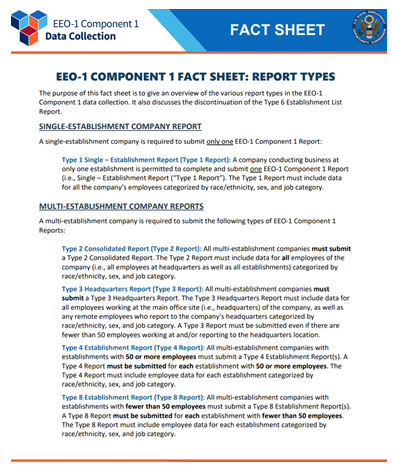
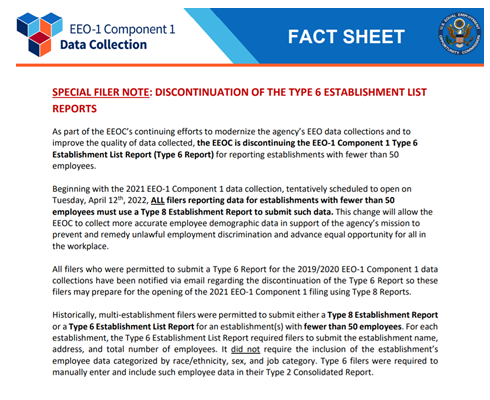


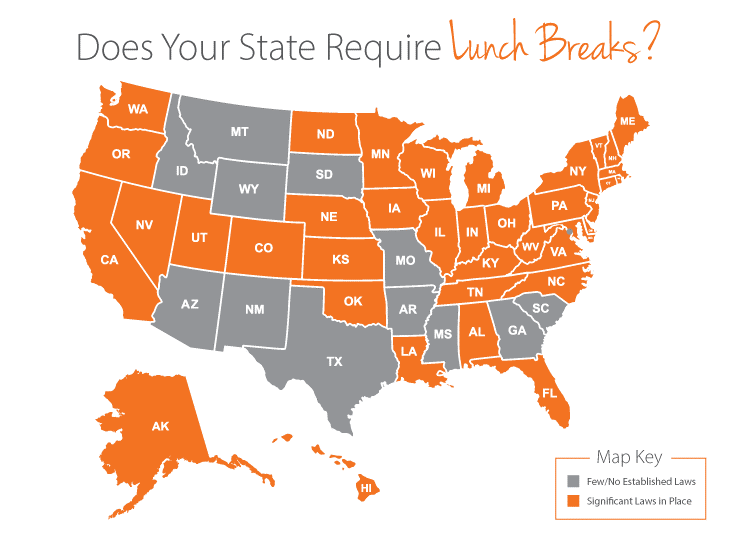
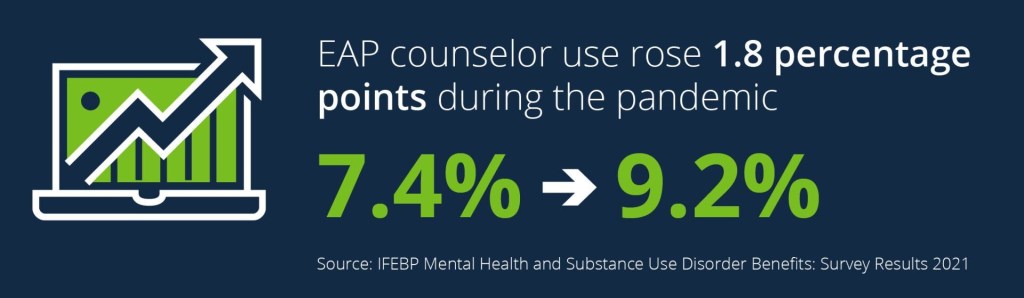
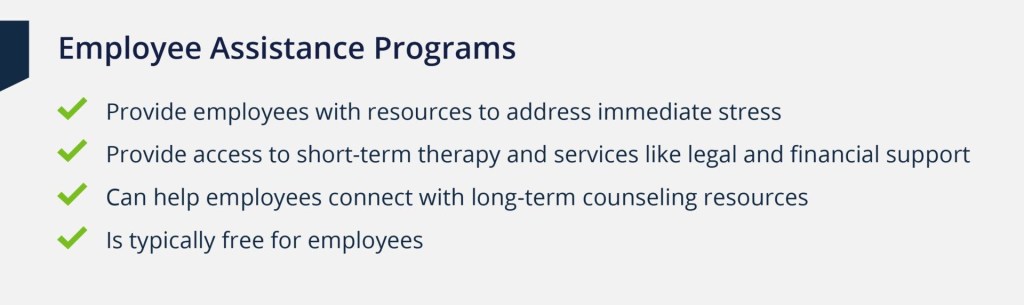


 BURR CONSULTING, LLC