Organizations large and small are challenged with the right approach for how best to communicate within their workforce. How personal do we make the communication? How do we communicate important information timely to a large group of individuals? Do we send a mass email? Do we have all hands meetings? The answer to these along with many other questions regarding workplace communication is that it depends; it depends on the workforce, the information, the timing and the culture of the organization.
All leaders will have a different approach to communication, whether the organization is 5 people for 50,000 people. The worst thing any of us can do is not communicate with the workforce, delivering less than positive news is not always easy but for an employee to learn about it on social media or through another channel of communication is not acceptable.
Below are 7 avenues for improved workplace communication:
Know Your Organization: How communication has and has not worked in the past within the organization. If you were an employee of the organization, how would you want to hear about good and/or bad news? If you are unsure of what avenue of communication to use, ask the workforce. Can you please everyone? Probably not, but it will make it easier and much more efficient to communicate with people knowing this information.
All Hands Meetings: This is a great approach to deliver information to a large group of employees. They hear the same message from the same person, there is no second or third hand information delivery. We found success with all hand’s meetings quarterly; we developed an agenda and each department leader presented on metrics. The downfall to this approach is employee’s not asking questions in front of peers or a larger group. Be open to suggestion or questions ahead of time to help prepare the information.
Bulletin Boards or Intranet Communication Walls: Bulletin boards have existed in organizations for decades. Keeping a bulletin board updated in a breakroom or near a timeclock is a great way to communicate information, if you consistently update the bulletin board with new information. If you have a memo that has not been changed in 1 year, employees will stop looking at the bulletin board. Remember the labor posters as well! The intranet is a new trend in organizations, a great place to update information and communicate, if all employees have access to the intranet. If you do use the intranet and it is updated, there should be a mechanism that alerts all employees of the update via email, text message, etc. so they know to review the new information.
Newsletter or Paychecks: Organization have had tremendous success with newsletters, we wrote a newsletter monthly, printed it and sent it out via email throughout the organization. Newsletters work if you are consistent, add a personal touch and have relevant information within the publication. I always added birthdays, new births, pictures of the shop and any upcoming meetings with 401k, health insurance etc. I also asked for input from employees within the organization. If someone wanted to write an article I was happy to add it, if the article was appropriate. Many organizations are now adding workplace communication memos on paycheck or direct deposit stubs. This is a great idea to communicate small amounts of information to the employees or the employee’s spouse.
Crew Meetings and Roundtable Discussions: Managers and supervisors will meet with a team prior to the start of a shift. The benefit to crew meetings or shop huddles is the manager/supervisor is familiar with the workforce and the group might be more comfortable asking questions in a smaller setting. Roundtable discussions are discussions held by managers and leaders of the organization with small groups of employees. Organization might choose to ask the employees questions or they might leave it as an open ended discussion. I have seen this work, if it is done consistently and if organizational leaders follow-up on questions or concerns with employee’s directly. Do not say “let me get back to you” and never get back to the employee.
Memos or Suggestion Box: Memos will work for small amounts of information, this is usually communicated by a manager or supervisor in a crew meeting, sent via email, posted on a bulletin board or updated on the intranet. Memos will work if they are short, relevant and timely. In past organizations we have found success with a suggestion box program, where other organizations have not had success. Is your organization ready for a suggestion box? Do you need a suggestion box? Is there value to adding a suggestion box? Will you or the leadership team follow-up individually with each employee on the suggestion good or bad to close the loop? Implementing a suggestion box program will take time and resources, research options prior to rolling out a program and ask the workforce if it would be valuable.
Decision Making Trees:
These are just a few of the many avenue’s organizations use to communicate within their respected organizations; email, memos home, safety meetings, safety councils, workplace communication teams, phone calls, text messages, training sessions, policies and procedures are other avenues of workplace communication. Knowing your organization and the workforce will help you as a leader develop a communication process and communicate information consistently and timely. As mentioned earlier, the last thing you want is for an employee to find out good and/or bad news through social media, on the internet or through the gossip mill. This is a negative for employee morale. If you do need assistance developing a communication plan or process, ask for help. Communication is critical to the success of any organization, large or small. If you commit to following up on a question or concern, ensure that you follow-up.
Beginning January 1, 2025, employers must provide at least 20 hours of paid prenatal personal leave (“PPPL”) during any 52-week calendar period, in addition to the existing statutory paid sick leave entitlement.
New York State recently released a website, including FAQs, regarding the new PPPL mandate. It remains to be seen whether the State will also release proposed and/or final regulations on the new mandate.
With less than a month to go before the New York PPPL mandate goes into effect, New York State released administrative guidance to help employers navigate the new requirements. Key FAQs provide the following insights and reminders for employers:
Employee Eligibility: While the mandate itself is silent on whether the New York State Paid Sick Leave employee eligibility requirements apply under the PPPL mandate, the FAQs confirm that all employees working for private-sector employers are covered. This includes full-time, part-time, exempt, and non-exempt workers.
Employer Coverage: The FAQs also confirm that all private-sector employers, regardless of size, are covered by the PPPL mandate.
Amount of Leave and Benefit Year: As noted above, under the impending mandate, each eligible employee gets 20 hours of PPPL during any 52-week calendar period. However, in discussing the 52-week period, the non-binding FAQs state that the first time the employee uses PPPL begins the 52-week period for that employee. The FAQs further note that, for example, the triggering date is the date that the leave is first recorded on an employee’s timesheet.
Reasons For Use: The mandate provides that PPPL can be used by employees to receive health care services during their pregnancy or related to such pregnancy, including physical examinations, medical procedures, monitoring and testing, and discussions with a health care provider related to pregnancy. Notably, the FAQs provide that PPPL can only be used by the pregnant employee and cannot be used by a pregnant individual’s spouse, partner, or other support person. Additionally, the FAQs offer some additional nonexclusive examples of appropriate uses of PPPL, including fertility treatment or care appointments, in vitro fertilization, and end-of-pregnancy care appointments. However, the FAQs note that PPPL cannot be used for post-natal or postpartum appointments.
No Accrual: The FAQs make clear that employees do not accrue PPPL. All employees automatically have 20 hours of PPPL beginning January 1, 2025, or upon their date of hire, whichever is later.
No New Hire Waiting Period: Regarding new hires, the FAQs confirm that PPPL is consistent with the New York State Paid Sick Leave Law in that it does not allow employers to provide any waiting period on when new hires can begin using the relevant time off benefit. In other words, eligible new hires can use PPPL for a covered absence immediately without satisfying a minimum amount of time worked before accessing the PPPL.
Interplay With Other Leaves: The PPPL mandate states that PPPL is in addition to sick leave provided under the New York State Paid Sick Leave Law. The FAQs appear to go a step further by stating that PPPL is a separate benefit from other leave policies and laws, and that the 20 hours of PPPL are in addition to any other available leave options.
No Retaliation: The FAQs reiterate that retaliation is prohibited and provide a few nonexclusive examples of retaliation. One such example is employers reducing other leave options like New York State Paid Sick Leave when the employee uses PPPL.
No Paystub Notification Requirement: The FAQs confirm that the PPPL mandate does not specifically require recordkeeping on paystubs. The guidance further reminds employers that it is a best practice to maintain clear records of available types of leave and amounts of types of leave used.
Notice & Documentation: Regarding employee notice to their employer, the FAQs state that employees should request PPPL like any other time off by using existing notification/request procedures within their workplaces. The New York Department of Labor encourages employees to give employers advance notice of leave requests and encourages employers to communicate how to request leave to their employees. The FAQs further explain that employers cannot ask employees to disclose confidential information about their health condition(s) as a condition of requesting to use PPPL.
Rate of Pay: The FAQs also reiterate that PPPL must be paid at the employee’s regular rate of pay, or the applicable minimum wage under New York State law, whichever is greater.
The PPPL mandate and corresponding new FAQs remain silent on several important topics. Some examples include (a) how the PPPL mandate operates in the context of union workers, (b) whether the PPPL mandate has a written policy requirement, and (c) what happens to unused PPPL at year end.
Considerations:
Review existing sick leave or PTO policies and practices, and assess the interplay with the PPPL requirements, and do the same assessment for any related attendance, conduct, anti-retaliation, and discipline policies and practices.
Determine whether to implement new policies and practices to ensure compliance with the PPPL mandate.
Train supervisory and managerial employees, as well as HR, on the new requirements.
This is an amendment to Labor Law Section 196-b that provides employees with 20 hours of paid leave time per year to be used for prenatal healthcare service appointments during their pregnancy or related to their pregnancy. This new law takes effect on January 1, 2025.
How does Paid Prenatal Leave relate to NYS Sick Leave in Labor Law 196-b?
Paid Prenatal Leave is a separate employee benefit from NYS Sick Leave (paid or unpaid). Prenatal health care appointments may be covered by NYS Sick Leave, Paid Prenatal Leave, or an existing employer’s leave policy. An employer cannot require an employee to choose one leave type over another or require an employee to exhaust one type of leave before using Paid Prenatal Leave. Paid Prenatal Leave is a stand-alone benefit available to employees seeking prenatal healthcare services.
Who is covered by the Paid Prenatal Leave Law?
All employees working for private-sector employers. Private-sector employers include persons, corporations, limited liability companies, or associations employing any individual in any occupation, industry, trade, business, or service, regardless of part-time status, and overtime exempt status.
Is this leave time in addition to existing leave policies and the NYS Sick Leave Law?
Yes, this is a new legal requirement that provides a separate benefit from other leave policies and laws. Employees are entitled to 20 hours of Paid Prenatal Leave in addition to any other available leave options.
Does employer size matter?
No, all private-sector employees are covered regardless of size.
Can spouses, partners, or other support persons use Paid Prenatal Leave to attend prenatal appointments with a pregnant person?
No, Paid Prenatal Leave may only be used by the employee directly receiving prenatal health care services.
Employees
Does an employee accrue Paid Prenatal Leave?
No, all employees automatically have 20 hours of Paid Prenatal Leave.
Do brand-new employees have Paid Prenatal Leave?
Yes, the law does not require employees to accrue Paid Prenatal Leave or work for an employer for a minimum amount of time before accessing Paid Prenatal Leave. All employees will be entitled to 20 hours of Paid Prenatal Leave per year after January 1, 2025.
Can employees use Paid Prenatal Leave in hourly increments?
Yes, employees must use this benefit in hourly increments.
What rate of pay applies to this leave?
An employee must be paid at the employee’s regular rate of pay, or the applicable minimum wage established by the Labor Law, whichever is greater, for the use of Paid Prenatal Leave.
What health care services are covered?
Paid Prenatal Leave covers health care services received by an employee during their pregnancy or related to such pregnancy, including physical examinations, medical procedures, monitoring and testing, and discussions with a health care provider related to the pregnancy.
Does this law apply to fertility treatment or care appointments, including in vitro fertilization?
Yes.
Does this law apply to end-of-pregnancy care appointments?
Yes.
Does this law apply to post-natal or postpartum appointments?
No.
Are employees required to submit medical records or documents to their employer?
No, and employers cannot ask employees to disclose confidential information about their health condition(s) as a condition of requesting to use Paid Prenatal Leave.
Can an employer ask me for details about my prenatal appointments?
No, and employers cannot ask employees to disclose confidential information about their health
condition(s) as a condition of requesting to use Paid Prenatal Leave.
What information do employees need to disclose to their employer to use Paid Prenatal Leave?
Employees should request time off like any other time off by using existing notification/request procedures within their workplaces. The Department encourages employees to give employers advanced notice of leave requests and encourages employers to communicate how to request leave to their employees.
If an employee requests Paid Prenatal Leave, can the employer require the employees to use a certain leave type if there is more than one option available?
No. The employee can use Paid Prenatal Leave for health care services related to their pregnancy, or they may use other available leave they have available.
When does a 52-week period begin each year?
The first time the employee uses Paid Prenatal Leave begins the 52-week period for that employee. For example, the triggering date is the date that the leave is first recorded on an employee’s timesheet.
What if an employee becomes pregnant more than once in a 52-week period?
An employee may use Paid Prenatal Leave on more than one pregnancy per year, but only 20 hours are available in a 52-week period. Any Paid Prenatal Leave hours remaining from the first pregnancy may be used during the second pregnancy if the second pregnancy is within the same 52-week period.
How many times can eligible employees use this benefit in one year?
This leave may be used throughout a 52-week period until the 20 hours are exhausted.
What if an employee needs more than 20 hours of leave or requests a different type of accommodation?
Employees may have additional options provided by other laws. Utilizing Paid Prenatal Leave does not preclude employees from asserting rights under other laws. As an example, employees should review the federal Pregnant Workers Fairness Act.
Employers
Can employers provide more than 20 hours of Paid Prenatal Leave?
Yes, nothing in the law restricts an employer from providing more than 20 hours.
Do I have to pay this benefit out if my employee does not use it?
No, if an employee separates from the employer, then the employer has no obligation to pay the employee for unused Paid Prenatal Leave hours.
Does an employer have to identify/classify Paid Prenatal Leave differently on pay stubs or in leave accrual banks?
While the law does not specifically require recordkeeping on paystubs, it is a best practice to maintain clear records of available types of leave and amounts of types of leave used in a manner accessible to both the employer and employee.
Employers cannot retaliate against employees for requesting Paid Prenatal Leave. What are some examples of retaliation?
A few examples include employers reducing other leave options like NYS Sick Leave when the employee uses Paid Prenatal Leave, employers changing work locations or hours after a Paid Prenatal Leave request is made.
Draft Policy Language:
“Organization X will provide employees with 20 hours of paid prenatal personal leave during any 52-week calendar period. Paid prenatal personal leave is in addition to leave provided under New York’s Sick Leave Law, local and federal law.
Paid prenatal personal leave may be used for healthcare services during or related to your pregnancy, including physical examinations, medical procedures, monitoring and testing, and discussions with your healthcare provider related to your pregnancy.
Paid prenatal personal leave may be taken in hourly increments and will be compensated at your regular rate of pay or the applicable minimum wage, whichever is greater.
If your need for leave is foreseeable, provide notice as soon as possible. If unforeseeable, provide notice as soon as practical. You are not required to provide documentation supporting your need for leave.”
Upon return to work following any paid prenatal personal leave, you will be restored to the position you held prior to taking leave or a position with the same pay and other terms and conditions of employment.
You will not be compensated for unused paid prenatal personal leave when your employment ends.
The Company will not retaliate against employees who request or take leave in accordance with this policy.
Many organizations are moving to a payroll debit card model for employee payments in lieu of cash (yes cash), checks or direct deposit. Debit cards and direct deposit are two options many organizations are offering and will continue to offer. We need to be aware of laws that regulate the use of the payroll debit cards and provide alternative options, per federal and state guidelines. One of the concerns at the federal level with these cards is that an organization cannot mandate where the funds can be redeemed. This mandate would violate the Electronic Fund Transfer Act (EFTA). Payroll debit card laws are written and enforced at the state level, some states prohibit employers from using pay cards without consent, place limitations on fees that can be charged and impose disclosure requirements. New York State is a state that requires consent and there have been recent court cases on this issue.
Below are 5 considerations on payroll debit cards:
“Do not make their use mandatory. This is simple advice but necessary, provide options for the workforce to utilize a direct deposit option. Working with a local bank or credit union is a great way to ensure employees understand direct deposit, checking and savings accounts.
Limit fees. If it was my money or paycheck, I wouldn’t be happy seeing a fee associated with withdrawals or moving money from one account to another. Limit or eliminate fees, fees might not be legal in your state.
Disclose every detail. This doesn’t mean provide a 30-page contract that details everything in legal terms. Ensure employees can understand the detail and have the option to ask questions. A frequently asked question list is a great place to start with disclosing details in an easy to understand format. Work with the debit card company to ensure accuracy and legality.
Ensure that the full amount can be withdrawn each pay period in multiple withdrawals without fees. This harkens back to the second suggestion. If it was my money, I wouldn’t be happy with any fees. It’s the employee’s money, ensure they can access and move it around as needed.
Ensure that there is a reasonable number of establishments nearby from which money can be withdrawn.”[i] Working with a local bank or credit union with easy to access ATM machines and multiple locations is a great option. Having a map with locations is another solution to assist employees withdraw cash or bank. Negotiating zero fees with the financial institution is an option, or at least a question to ask. Again, create a process that assists employees with the money withdrawal. Provide alternatives and options for employees.
New York State Area’s to Consider:
“Beyond the notice and consent requirements, the additional restrictions applicable to using payroll debit cards included:
Imposition of a seven-business day waiting period from execution of consent to initial payment by means of payroll debit card.
A prohibition on a laundry list of potential fees.
Requiring that wages paid by payroll debit card may not be linked to any form of credit.
A prohibition on employers passing on costs associated with payroll debit card accounts or otherwise receiving kickbacks from third parties associated with payroll debit card programs.
A prohibition on expiration of wages.
An additional notice requirement if there are changes in the terms and conditions of the card accounts or fees charged to employees.
A requirement that union approval be obtained for unionized employees.
Providing a detailed written notice to employees.
Obtaining voluntary consent prior to payment by either of these methods.”[ii]
The laws and regulations vary on payroll debit cards from state-to-state and will continue to evolve as payment options and technology evolves. Be aware of the regulations in each state you operate in. My recommendation is to make this an option for employees, just as direct deposit is an option (but strongly preferred). Don’t force employees into using a payroll debit card or direct deposit, it could violate the law. Seek guidance prior to implementing payroll debit cards and work with a reputable company. SHRM’s vendor directory has four options to choose from and there are multiple websites that rank these organizations, based on service, size and reputation. This should not be a one size fits all model, benchmark and find a solution that works best for your organization. Your payroll provider and/or local bank might have suggestions on preferred vendors to consider or suggested alternatives.
“The New York State Department of Labor announced recently that it does not intend to implement its proposed regulations that would have imposed burdensome requirements on employers to provide call-in pay to employees under a variety of circumstances not currently covered under existing regulations. The regulations were initially proposed in November 2017, and then were revised in December 2018 after public comments were received and reviewed. The NYSDOL now intends to let the regulatory process expire with respect to the proposed regulations and potentially revisit this issue in the future.”[iv] Continue to watch for the revisit in the future, this will impact most organizations in New York State.
NYC Mandates Workplace Lactation Room March 18, 2019
“Beginning March 18, 2019, employers in the Big Apple with at least four workers must provide lactation rooms and create a written lactation-accommodation policy that must be given to workers when they are hired. The city’s human rights commission will release a model policy before the effective date.”[v]
Upcoming New York State Minimum Wage, Executive & Administrative Exempt Salary Changes, Farm Overtime Threshold Reductions and Nationwide Changes
As you know, this will also impact the minimum salary levels to be paid to Executive and Administrative exempt employees. The new minimum wage and minimum salary levels can be found below. Things to keep in mind:
The updated poster. You will be required to post a new minimum wage poster. You will be able to find the new poster here. Remember, there could be corresponding increases in the tipped wage and wages paid for fast food employees in your area.
The minimum salary level to be considered exempt from overtime under NYS law for Executive and Administrative employees is tied to the minimum wage and may also be increasing for your industry and area. Remember, there is no NYS minimum salary level for Professional exemptions. For Professional employees you would be subject to the Federal minimum salary level.
Minimum Wage Increases
Once adopted, the FY2024 Budget would establish a new statutory minimum wage rate schedule in Section 652 of the Labor Law as follows:
Indexing the Minimum Wage
Starting January 1, 2027, additional annual minimum wage increases would be implemented each year based on the Northeast region measure of consumer price increases for urban wage earners and clerical workers (CPI-W). There would be no increases to the minimum wage if over a period of the prior year, the calculations published by the United States Department of Labor show that:
The CPI-W for Northeast Region Urban Wage Earners is negative.
The statewide unemployment rate increases by one-half percentage point or more.
Total non-farm employment decreases (measured seasonally).
Adjusted minimum wages are required to be published by the State Department of Labor no later than October 1st of each year.
Adjustments to Salary Thresholds, Allowances, and Gratuities
It is worth noting that minimum wage orders in effect would remain in effect, including wage orders that address minimum salary levels for executive and administrative exemptions, gratuities, and allowances for meals, apparel, etc. As these minimum wage increases take effect, the State Department of Labor would amend the wage orders to increase all monetary amounts (i.e., salary levels and allowances) in the same proportion as the increase in the hourly minimum wage. The state is expected to publish the official amounts of these adjustments. We calculate the salary threshold in 2024 for downstate would rise to $1,200 weekly, and the upstate salary basis threshold would rise to $1,125 weekly.
The wage for food service workers who receive tips would remain lower than the regular minimum wage by one-third and rounded to the nearest five cents. While the state has not issued its official calculations, our unofficial calculations for tipped food service workers in the Hospitality Industry would be as follows:
TIPPED FOOD SERVICE WORKERS
Year
New York City, Westchester, Nassau, Suffolk Counties
Upstate New York
2024
$10.70
$10.00
2025
$11.00
$10.35
2026
$11.35
$10.70
2027+
$11.35 + annual increase
$10.70 + annual increase
NYS Reduces Overtime Threshold for Farm Workers to 40 hours Per Week
New York State Department of Labor (NYSDOL) Commissioner Roberta Reardon issued an order accepting the recommendation of the Farm Laborers Wage Board to lower the current 60-hour threshold for overtime pay to 40 hours per week by January 1, 2032, allowing 10 years to phase in the new threshold. NYSDOL will now be undergoing a rule making process which will include a 60-day public comment period. This applies to certain agricultural employers and employees only.
Under proposed language, an employer shall pay an employee for overtime at a wage rate of one- and one-half times the employee’s regular rate of pay for hours worked in excess of the following number of hours in one workweek:
(a) 60 hours on or after January 1, 2020; (b) 56 hours on or after January 1, 2024; (c) 52 hours on or after January 1, 2026; (d) 48 hours on or after January 1, 2028; (e) 44 hours on or after January 1, 2030; (f) 40 hours on or after January 1, 2032.
Minimum Wage for Fast Food Employees The minimum wage for fast food employees working outside of New York City will increase to $14.50 per hour. The final scheduled increase to $15.00 per hour will take effect on July 1, 2021.
What is a living wage?
Currently, as of November 8th, 2023 in Tompkins County the living wage is $18.45/hour for a single person. This is based upon the following from a detailed study produced by a team from the Ithaca and Buffalo Co-Labs of Cornell’s School of Industrial and Labor Relations led by ILR Co-Lab Researchers, Ian Greer and Rusty Weaver. The latest study was updated to take into account the extreme inflation that took place this past year. Read more about the latest study.
Form I-9, Eligibility to work in the United States: This form is required in every state for new hires. Organizations must verify that new employees are legally eligible to work in the United States. Ensure the form is filled out correctly and signed by the right person in the organization, audits are a great option for an organization to review old I-9 forms.
The Wage Theft Prevention Act (WTPA) took effect on April 9, 2011.
The law requires employers to give written notice of wage rates to each new hire.
The notice must include:
Rate or rates of pay, including overtime rate of pay (if it applies)
How the employee is paid: by the hour, shift, day, week, commission, etc.
Regular payday
Official name of the employer and any other names used for business (DBA)
Address and phone number of the employer’s main office or principal location
Allowances taken as part of the minimum wage (tips, meal and lodging deductions)
The notice must be given both in English and in the employee’s primary language (if the Labor Department offers a translation). The Department currently offers translations in the following languages: Spanish, Chinese, Haitian Creole, Korean, Polish and Russian.
Sample Pay Notices
The employer may provide its own notice, as long as it includes all of the required information, or use the Department’s sample notices.
More Information
The WTPA also included other provisions that employers need to know, such as stronger protections for whistleblowers and increased penalties for wage theft.
Notice and Acknowledgement of Pay Rate and Payday Under Section 195.1 of the New York State Labor Law Notice for Hourly Rate Employees LS 54 is a blank work agreement that contains all of the fields that employers must include to notify each employee in writing of conditions of employment at time of commitment to hire. This agreement must be completed to comply with the Wage Theft Prevention Act.
It should be given to the employee in his or her primary language if that language is available. If the employee’s primary language is not available above, then the form should be given to the employee in English.
Notice and Acknowledgement of Pay Rate and Payday Under Section 195.1 of the New York State Labor Law Notice for Multiple Hourly Rate Employees LS 55 is a blank work agreement that contains all of the fields that employers must include to notify each employee in writing of conditions of employment at time of commitment to hire. This agreement must be completed to comply with the Wage Theft Prevention Act.
It should be given to the employee in his or her primary language if that language is available. If the employee’s primary language is not available above, then the form should be given to the employee in English.
Employees Paid a Weekly Rate or a Salary for a Fixed Number of Hours (40 or Fewer in a Week)
Notice and Acknowledgement of Pay Rate and Payday Under Section 195.1 of the New York State Labor Law Notice for Employees Paid a Weekly Rate or a Salary for a Fixed Number of Hours (40 or Fewer in a Week) LS 56 is a blank work agreement that contains all of the fields that employers must include to notify each employee in writing of conditions of employment at time of commitment to hire. This agreement must be completed to comply with the Wage Theft Prevention Act.
It should be given to the employee in his or her primary language if that language is available. If the employee’s primary language is not available above, then the form should be given to the employee in English.
Employees Paid Salary for Varying Hours, Day Rate, Piece Rate, Flat Rate or Other Non-Hourly Pay
Notice and Acknowledgement of Pay Rate and Payday Under Section 195.1 of the New York State Labor Law Notice for Employees Paid Salary for Varying Hours, Day Rate, Piece Rate, Flat Rate or Other Non-Hourly Pay LS 57 is a blank work agreement that contains all of the fields that employers must include to notify each employee in writing of conditions of employment at time of commitment to hire. This agreement must be completed to comply with the Wage Theft Prevention Act.
It should be given to the employee in his or her primary language if that language is available. If the employee’s primary language is not available above, then the form should be given to the employee in English.
Prevailing Rate and Other Jobs
Notice and Acknowledgement of Pay Rate and Payday Under Section 195.1 of the New York State Labor Law Notice for Prevailing Rate and Other Jobs LS 58is a blank work agreement that contains all of the fields that employers must include to notify each employee in writing of conditions of employment at time of commitment to hire. This agreement must be completed to comply with the Wage Theft Prevention Act.
It should be given to the employee in his or her primary language if that language is available. If the employee’s primary language is not available above, then the form should be given to the employee in English.
Exempt Employees
Notice and Acknowledgement of Pay Rate and Payday Under Section 195.1 of the New York State Labor Law Notice for Exempt Employees LS 59 is a blank work agreement that contains all of the fields that employers must include to notify each employee in writing of conditions of employment at time of commitment to hire. This agreement must be completed to comply with the Wage Theft Prevention Act.
It should be given to the employee in his or her primary language if that language is available. If the employee’s primary language is not available above, then the form should be given to the employee in English.
New York State Department of Labor Form LS 309 is a blank farm work agreement that contains all of the fields that employers must include to notify each employee in writing of conditions of employment at time of commitment to hire. This agreement must be completed to comply with the Wage Theft Prevention Act.
It should be given to the employee in his or her primary language if that language is available. If the employee’s primary language is not available above, then the form should be given to the employee in English.
New York State Department of Labor Form AL 447 is a blank wage statement. It contains all of the fields that employers of year-round or seasonal workers must provide to document each pay period to comply with the Wage Theft Prevention Act.
New York State Department of Labor Form AL 446 is a sample of a completed wage statement for agricultural workers.
2019 W-9 Form: (Revised October 2018)these forms are utilized for consultants and others that might be working within your organization. This form was updated in October 2018. Ensure you have an updated form from any consultants or others that are issued a 1099. No current changes.
FMLA Forms: “The Family and Medical Leave Act (FMLA) provides certain employees with up to 12 weeks of unpaid, job-protected leave per year. It also requires that their group health benefits be maintained during the leave.
FMLA is designed to help employees balance their work and family responsibilities by allowing them to take reasonable unpaid leave for certain family and medical reasons. It also seeks to accommodate the legitimate interests of employers and promote equal employment opportunity for men and women.
FMLA applies to all public agencies, all public and private elementary and secondary schools, and companies with 50 or more employees. These employers must provide an eligible employee with up to 12 weeks of unpaid leave each year for any of the following reasons:
For the birth and care of the newborn child of an employee;
For placement with the employee of a child for adoption or foster care;
To care for an immediate family member (i.e., spouse, child, or parent) with a serious health condition; or
To take medical leave when the employee is unable to work because of a serious health condition.
Employees are eligible for leave if they have worked for their employer at least 12 months, at least 1,250 hours over the past 12 months, and work at a location where the company employs 50 or more employees within 75 miles. Whether an employee has worked the minimum 1,250 hours of service is determined according to FLSA principles for determining compensable hours or work.” (DOL Website)
FMLA Notice Forms
Employers covered by the FMLA are obligated to provide their employees with certain critical notices about the FMLA so that both the employees and the employer have a shared understanding of the terms of the FMLA leave. For more information on satisfying the FMLA’s employer notification requirements, see WHD Fact Sheet # 28D: Employer Notification Requirements under the Family and Medical Leave Act.
Employers can use the following forms to provide the notices required under the FMLA.
General Notice, the FMLA poster – satisfies the requirement that every covered employer display or post an informative general notice about the FMLA. This notice can also be used by employers with eligible employees to satisfy their obligation also to provide FMLA general notice to employees in written leave guidance (e.g., handbook) or individually upon hire.
Eligibility Notice, form WH-381 – informs the employee of his or her eligibility for FMLA leave or at least one reason why the employee is not eligible.
Rights and Responsibilities Notice, form WH-381 (combined with the Eligibility Notice) – informs the employee of the specific expectations and obligations associated with the FMLA leave request and the consequences of failure to meet those obligations.
Designation Notice, form WH-382 – informs the employee whether the FMLA leave request is approved; also informs the employee of the amount of leave that is designated and counted against the employee’s FMLA entitlement. An employer may also use this form to inform the employee that the certification is incomplete or insufficient and additional information is needed.
Certification Forms
Certification is an optional tool provided by the FMLA for employers to use to request information to support certain FMLA-qualifying reasons for leave. An employee can provide the required information contained on a certification form in any format, such as on the letterhead of the healthcare provider, or official documentation issued by the military.
Please do not send any completed certification forms to the U.S. Department of Labor, Wage and Hour Division. Return completed certifications to the employee to provide to his or her employer.
There are five DOL optional-use FMLA certification forms.
Certification of Healthcare Provider for a Serious Health Condition
To be classified as exempt from overtime under state law (Alaska Statute 23.10.055), bona fide administrative, professional and executive employees must satisfy certain salary and duties tests. The minimum salary required for exemption is two times the state minimum wage for the first 40 hours of employment each week. As a result of a change in the state’s minimum wage, the minimum salary required for these exemptions under state law will increase to $938.40 per week on January 1, 2024.
California
To qualify for the administrative, professional and executive exemptions in California, employees must meet certain salary and duties tests and must be paid at least twice the state minimum hourly wage based on a 40-hour week. The state’s minimum wage will increase on January 1, 2024. As a result, employers must pay a salary of at least $1,280 per week beginning January 1, 2024 to qualify for the exemption.
Computer software employees may be paid on an hourly or a salary basis in order to qualify for exemption from California’s overtime requirements. Beginning January 1, 2024, computer software employees who are paid on an hourly basis must earn at least:
$55.58 per hour (for all hours worked); or
A monthly salary of $9,646.96; and
An annual salary of $115,763.35.
Colorado
In Colorado, employees must meet certain salary and duties tests to qualify for overtime exemption. As a result of the Colorado Overtime & Minimum Pay Standards Order, the minimum salary required to qualify for the executive/supervisor, administrative and professional exemptions under state law will increase to $1,057.69 per week on January 1, 2024.
Under the state’s exemption for highly technical computer employees, the employee may be paid by salary (at least $1,057.69 per week in 2024) or by the hour. The minimum hourly rate for 2024 for these employees hasn’t been published yet.
Note: In Colorado, an exempt employee’s salary generally must also be sufficient to satisfy the minimum wage for all hours worked in a workweek. This is true in certain other states as well, some of which will have a new minimum wage in 2024. Employers may want to consult legal counsel about how this rule may impact them.
Maine
To be classified as exempt from overtime under state law, administrative, professional and executive employees must satisfy certain salary and duties tests and receive a salary that exceeds 3,000 times the state minimum wage divided by 52. Due to an increase in the state’s minimum wage, the minimum salary required for the administrative, professional and executive exemptions from overtime under state law will increase to $816.35 per week on January 1, 2024.
Washington
In Washington, employees must satisfy certain salary and duties tests to be classified as exempt from overtime under state law. As a result of a new state minimum wage, the salary threshold used to determine which workers are exempt from overtime under state law will also increase to $1,302.40 per week effective January 1, 2024.
Note: Employers may pay exempt computer professionals by the hour, provided they pay at least 3.5 times the minimum wage ($56.98 per hour in 2024).
2025 New York State Paid Family Leave and Workers Compensation Rates
Up to 12 weeks of leave
New York State Paid Family Leave provides eligible employees with up to 12 weeks of job protected, paid time off to bond with a new child, care for a family member with a serious health condition, or to assist loved ones when a family member is deployed abroad on active military service. This time can be taken all at once, or in increments of full days.
At 67% of pay (up to a cap)
Employees taking Paid Family Leave receive 67% of their average weekly wage, up to a cap of 67% of the current New York State Average Weekly Wage (NYSAWW). For 2025, the NYSAWW is $1,757.19, which means the maximum weekly benefit is $1,177.32. This is $26.16 more than the maximum weekly benefit for 2024.
Through Legislation S.2928-A/A.06098-A, the definition of “family members” expands to include siblings. This includes biological siblings, adopted siblings, step-siblings and half-siblings. These family members can live outside of New York State, and even outside of the country.
Employer Resources
There are several resources to help employers understand and communicate New York Paid Family Leave benefit updates to their employees.
New York Paid Family Leave provides job-protected, paid time off so employees can:
bond with a newly born, adopted, or fostered child.
care for a close relative with a serious health condition; or
Assist loved ones when a family member is deployed abroad on active military service.
By NYS PFL Definition:
spouse
domestic partner (including same and different gender couples; legal registration not required)
child/stepchild and anyone for whom you have legal custody
parent/stepparent
parent-in-law
grandparent
grandchild
sibling (starting in 2023) Workers should check with their employer’s Paid Family Leave insurer to learn when sibling care goes into effect for their policy. For employees who work for self-insured employers, coverage begins January 1, 2023.
Employees who believe they are eligible for Paid Family Leave should contact their _______ as soon as possible. More information can be found at www.ny.gov/programs/new-york-state-paid-family-leave. Organization will abide by all changes to NYSPFL and communicate such changes to the employees. For additional information please alert your President, or the Statement of Rights Posting on Paid Family Leave.
Legal Area’s and Changes to Remember and Communicate:
Employees have job protection, similar to FMLA.
Paid Sick Leave policies and procedures.
Right to keep their health insurance while on leave.
No retaliation or discrimination against those who take leave.
Citizenship is never a factor in eligibility for NYSPFL.
Review the language contained in your employee handbook, policy, or policy manual. Update FMLA and NYSPFL language to reflect changes and communicate the policy to the workforce.
Communicate PFL payroll deductions for 2020 to the workforce now or during open enrolment. My recommendation is to do this in writing via a template and obtain a signature. NYS has a PDF template referenced above.
Ensure the NYS PFL statement of rights for Paid Family Leave in 2023 is up-to-date and communicated to the workforce. This includes the postings; disability provider or state is providing these postings to employers. Watch the expiration dates on the postings, this is a common area in an audit that needs to be corrected.
A proper call-in procedure for intermittent leave is necessary. Do you accept text messages? What about emails? This should all be clearly communicated in a policy or procedure. How much notice?
New York State Paid Sick Leave
I am happy to work with any employer’s on ensuring policy, communication mechanisms, postings and other NYSPFL material is legal and up to date. Ensure you are reviewing this information annually and communicating changes to PFL rates annually. Work with your payroll provider to ensure and verify the percentage deductions are accurate and live in the payroll system. Remember interns and seasonal employees and communicate if they do or do not qualify for PFL. There are forms to fill out online if they do not qualify to ensure the deduction is not taken.
Frequently Asked Questions
How many weeks of Paid Family Leave are available to employees? Eligible employees can take up to 12 weeks of Paid Family Leave.
How much will employees get paid when taking Paid Family Leave? Employees taking Paid Family Leave in 2025 will get 67% of their average weekly wage, up to a cap of 67% of the NYSAWW of $1,757.19.
What is the maximum weekly benefit? The maximum weekly benefit for 2025 is $1,177.32.
If I start my continuous leave in one year and it extends into the next, what will my benefit rate be? You get the benefit rate in effect on the first day of your leave.
If I start my intermittent leave in 2024, and it extends into 2025, am I eligible for the benefits at the 2025 rate? You get the benefit rate in effect on the first day of a period of leave. When more than three months pass between days of Paid Family Leave, your next day or period of Paid Family Leave is considered a new claim under the law. This means you will need to file a new request for Paid Family Leave and that you may be eligible for the increased benefits available should that day or period of Paid Family Leave begin in 2025.
I am having a baby in 2024; can I wait until 2025 to take Paid Family Leave? Yes, you can take (and must complete) Paid Family Leave for bonding with a new child at any time within the first 12 months of the child’s birth, adoption, or foster care placement, provided that you remain an eligible, covered employee.
I used all 12 weeks of Paid Family Leave in the last year; can I take more Paid Family Leave this year if I experience another qualifying event? You may take up to 12 weeks of Paid Family Leave in every 52-week period based on a rolling calendar. This means that if you used the full 12 weeks of leave, the next time you would be eligible to take Paid Family Leave again is one year from your first day of leave.
What is the weekly employee contribution rate? If you are paid weekly, the payroll contribution is 0.388% of your gross weekly wages and is capped at an annual maximum of $354.53. If your gross weekly wages are less than the NYSAWW ($1,757.19 per week), you will have an annual contribution amount less than the annual cap of $354.53, consistent with your actual wages.
For example, if you earn about $27,000 a year ($519 a week), you will contribute about $2.01 per week.
If you are not paid weekly, the payroll contribution will be 0.388% of your gross wages for the pay period.
What is the maximum amount employees will pay for Paid Family Leave? The maximum employee contribution for 2025 is $354.53.
On March 31, 2024, New York updated the NYSAWW. When does this NYSAWW take effect for Paid Family Leave deduction and benefit caps? The new NYSAWW only applies to the 2025 benefit and will not affect Paid Family Leave deductions or benefits until January 1, 2025, if leave was begun on or after that date. The new NYSAWW does not have any impact on Paid Family Leave benefits in 2024.
What is the NYSAWW that will be used for Paid Family Leave benefits in 2025? $1,757.19.
Fully funded by employees
New York State Paid Family Leave is insurance that may be funded by employees through payroll deductions. For 2025, employees will contribute 0.388% of their gross wages per pay period, with a maximum annual contribution of $354.53.
Employees earning less than the current NYSAWW of $1,757.19 will contribute less than the annual cap of $354.53, consistent with their actual wages.
Here are some contribution and benefit examples at different income levels:
Employees earning $519 a week (about $27,000 a year) will contribute about $2.01 from their gross wages each week ($519 x 0.388%). When taking the benefit, these employees will receive $347.73 per week, up to a maximum total benefit of $4,172.76.
Employees earning $1,000 a week ($52,000 a year) will contribute about $3.88 from their gross wages each week ($1,000 x 0.388%). When taking the benefit, these employees will receive $670 per week, up to a maximum total benefit of $8,040.
Employees earning the NYSAWW of $1,757.19 (about $91,300 a year) or more will contribute 0.388% from their gross wages each pay period until they reach the maximum of $354.53. When taking the benefit, these employees will receive $1,177.32, up to a maximum total benefit of $14,127.84.
The maximum weekly benefit rate for workers’ compensation claimants is two-thirds of the New York State average weekly wage for the previous calendar year, as determined by the New York State Department of Labor (Workers’ Compensation Law §§ 2[16] and 15[6]).
The maximum weekly benefit rate for workers’ compensation claimants is two-thirds of the New York State average weekly wage for the previous calendar year, as determined by the New York State Department of Labor (Workers’ Compensation Law §§ 2[16] and 15[6]).
Qualified transportation fringe benefit. For tax year 2025, the monthly limitation for the qualified transportation fringe benefit and the monthly limitation for qualified parking rises to $325, increasing from $315 in tax year 2024.
Health flexible spending cafeteria plans. For the taxable years beginning in 2025, the dollar limitation for employee salary reductions for contributions to health flexible spending arrangements rises to $3,300, increasing from $3,200 in tax year 2024. For cafeteria plans that permit the carryover of unused amounts, the maximum carryover amount rises to $660, increasing from $640 in tax year 2024.
Medical savings accounts. For tax year 2025, participants who have self-only coverage the plan must have an annual deductible that is not less than $2,850 (a $50 increase from the previous tax year), but not more than $4,300 (an increase of $150 from the previous tax year).
The maximum out-of-pocket expense amount rises to $5,700, increasing from $5,550 in tax year 2024.
For family coverage in tax year 2025, the annual deductible is not less than $5,700, increasing from $5,550 in tax year 2024; however, the deductible cannot be more than $8,550, an increase of $200 versus the limit for tax year 2024. For family coverage, the out-of-pocket expense limit is $10,500 for tax year 2025, rising from $10,200 in tax year 2024.
The Internal Revenue Service recently announced 2024 dollar limits for qualified retirement plans (including 401(k) plans), deferred compensation plans, and health and welfare plans. Adjustments to certain limits are based on a cost-of-living index.
In addition, the Social Security taxable wage base, which affects qualified retirement plans “integrated” with Social Security, typically adjusts each year. For 2024, the taxable wage base increases to $160,200.
For 2024, most limits increased with the exception of catch-up contributions limits and limits fixed by statute, the latter of which do not adjust based on the cost of living. The increased limits for 2024 are highlighted in bold below.
Qualified Retirement Plan Limits
2024 Limit
2023 Limit
Annual Limit on 401(k)/403(b) Deferral Contributions
$23,000
$22,500
Annual Limit on Age 50 and Older 401(k)/403(b) Catch-up Contributions
$7,500
$7,500
Annual Compensation Limit
$345,000
$330,000
Annual Contribution Limit for Defined Contribution Plans
$69,000
$66,000
Annual Benefit Limit for Defined Benefit Plans
$275,000
$265,000
Prior Year Compensation Amount for Determining Highly Compensated Employees
$155,000
$150,000
Key Employee Compensation Limit
$220,000
$215,000
Annual Limit on SIMPLE Contributions
$16,000
$15,000
Annual Limit on Catch-up Contributions to SIMPLE Plans
$3,500
$3,500
ESOP Account Balance Limit Subject to 5-Year Distribution Period
$1,380,000
$1,330,000
Incremental Amount Adding Additional Year(s) to ESOP 5-Year Distribution Period
$275,000
$265,000
Earnings Threshold for SEP Contribution
$750
$750
Deferred Compensation Limits
2024 Limit
2023 Limit
Annual Limit on 457(b) Contributions
$23,000
$22,500
Annual Limit on Catch-up Contributions to 457(b) Plans
$7,500
$7,500
409A Specified Employee Compensation Threshold
$220,000
$215,000
409A Involuntary Separation Pay Limit
$690,000
$660,000
Health and Welfare Plan Limits
2024 Limit
2023 Limit
Annual Limit on Salary Reduction Contributions to Health FSA
$3,200
$3,050
Annual Limit on Health FSA Carryover
$640
$610
Annual Limit on Salary Reduction Contributions to Dependent Care FSA
$5,000 if married filing jointly or if single $2,500 if married filing separately
$5,000 if married filing jointly or if single $2,500 if married filing separately
Annual Limit on HSA Contributions
$4,150 (EE only)$8,300 (family)
$3,850 (EE only) $7,750 (family)
Annual Limit on Catch-up Contributions to HSA
$1,000
$1,000
Annual Minimum Deductible for High Deductible Health Plans
$1,600 (EE only)$3,200 (family)
$1,500 (EE only) $3,000 (family)
Annual Limit on High Deductible Health Plan Out-of-pocket Expenses
Workers’ compensation is a benefit mandated by laws in all 50 states, the District of Columbia, Puerto Rico and the Virgin Islands for most employers. Regardless of how safe an employer may try to make its workplace, on-the-job accidents and job-related illnesses occur.
When and what are these laws designed for:
Workers’ compensation is a system of state laws that originated in 1911.
These laws provide medical care and compensation to injured workers on a no-faultbasis.
The purpose of workers’ compensation laws is to provide:
Coverage of medical expenses for treatment of injuries or occupational illness.
Income protection for employees who must be absent from work because of occupational illness or injury.
Limited compensation for serious permanent injury such as loss of limb or loss of life.
These laws also contain anti-retaliation provisions, which prohibit employers from retaliating against any employee because he or she has filed a claim or received benefits under the law.
Reviewing and Reducing Workers Compensation Costs:
Promptly provide first aid, and if the employee requires emergency medical treatment, accompany the employee to a health care provider.
Obtain facts from the employee about the accident.
Inform the employee of his or her workers’ compensation coverage for job-related injuries.
Investigate and document the accident as soon as possible and the steps to follow to prevent similar accidents, as relevant.
Direct the immediate supervisor to stay in touch with the employee and/or a family member of the employee.
Develop and implement an employee safety culture.
Establish and empower a safety management committee that is in charge of your accident prevention program.
Educate managers about the cost and impact of workers’ compensation and hold them accountable for prevention of injuries.
Report workers’ compensation injuries as soon as possible and decide on appropriate steps to take to prevent similar injuries.
Have a light-duty/return-to-work program.
Maintain frequent contact with the injured employee and the workers’ compensation case manager.
Dispute claims that might not be related to a workplace injury.
Work with insurance provider to truly understand open claims, costs associated with claims and settlement options.
If you are disputing, ensure you understand the legal hearing process, this can add tremendous costs if trials are delayed or rescheduled. Guess what, you pay for the legal fees associated with this.
Settle ongoing claims so the injury is off your books.
Change insurance providers. If your organizations rates continue to rise, it might be time to review other compensation companies. I recently spoke to a client, small business with 20-30 employees, the comp company raised the rates $10,000 per year. The small business switched insurance providers and found immediate savings.
Who needs workers compensation insurance (New York State):
Workers in all for-profit businesses and most nonprofits
Domestic workers, sitters, companions and live-in maids employed 40 hours per week in a residence
Farm workers whose employer paid $1,200 or more for farm labor in the preceding year
(catch all in NYS) Any other worker the Workers’ Compensation Board determines is an employee (Uber, might be an example of this)
Some states have severe penalties for not carrying workers’ comp insurance
The penalty for not purchasing workers’ comp insurance when it is required varies by state. It can result in a fine, jail time, or both.
States with severe penalties include:
California: In California, it is a criminal offense to not provide workers’ compensation for your employees. It’s punishable by up to a year in jail and a fine of no less than $10,000 – or both. Illegally uninsured employers could face a penalty of up to $100,000.
Illinois: An employer who did not provide workers’ comp when it was required must pay $500 for each day of noncompliance, with a minimum fine of $10,000.
New York: Illegally uninsured employers could be charged with a misdemeanor or a felony. Fines range from $1,000 to $50,000, in addition to a penalty of $2,000 for every 10 days without coverage.
Pennsylvania: In Pennsylvania, intentional noncompliance is a felony of the third degree. It can result in a fine of $15,000 and up to seven years in jail.
INCIDENT/NEAR MISS REPORT
(Check one):
___An incident is an event that caused injury to a person or damage to equipment, building or materials.
___A near miss is an event that could have caused injury to a person or damage to equipment, building or materials.
Person completing this form: _________________________ Date: __________________
Name and job title of the employee involved in the incident/near miss: ____________________
Date of incident/near miss: ________________Time of incident/near miss: _______a.m./p.m.
Department and location where the incident/near miss occurred: _________________________________________________________
Employee’s shift on the day of the incident/near miss (from) _____________ a.m./p.m. (to) _____________ a.m./p.m.
Did an injury occur? _____ Yes _____ No
Nature of the injury (strain, cut, bruise, etc.): ______________________________________ __________________________________________________________________________
Body part(s) affected: ________________________________________________________
Medical treatment required? _____ Yes _____ No If yes, what type? _____ First aid on-site _____ Express care _____ Doctor _____ Hospital
Name of the facility, hospital or physician: _________________________________________
Was the employee hospitalized overnight as a patient? _____ Yes _____ No
Did the employee leave work early due to the injury? _____ Yes _____ No If yes, what time? __________ a.m./p.m.
Date the employee returned to regular duty: ____________________
Date the employee returned with light duty restrictions: _________________
Describe the incident fully: (use back page if necessary or sketch on back if needed to clarify):
Forward this form to the Human Resources Department as soon as possible following the incident or near miss.
Note: If an employee receives medical treatment from a doctor or hospital, additional forms will need to be filled out and forwarded to the HR Dept. along with the incident report so a workers’ compensation claimed can be filed.
Misdemeanors are sealed three years from the individual’s release from prison or from the imposition of sentence if there was no incarceration; and
Felonies are sealed eight years after release from prison or from the imposition of sentence if there was no incarceration.
The Clean Slate Act exempts certain categories of serious offenses, and does not seal the following convictions:
Class A felonies (very serious felonies including murder, treason, arson, terrorism kidnapping—excluding certain Class A drug convictions);
Sexually Violent Offenses; and
Sex Crimes.
Critical to employers in New York State, the Clean Slate Act prohibits employers from making any inquiry regarding automatically sealed convictions or making any adverse decision concerning an individual’s employment based on automatically sealed convictions. Employers remain permitted to access and consider sealed convictions in making employment decisions when required by state or federal law to conduct a fingerprint-based background check or where authorized to conduct a fingerprint-based background check because the applicant would be working with children, the elderly, or vulnerable adults.
The Clean Slate Act is limited to criminal records under New York State law. Federal offenses and records of convictions in other states are not sealed. Further, convictions will not be sealed where the individual has a criminal charge pending, is on probation, or is under parole supervision when the time period for automatic sealing occurs.” (Littler)
This law will automatically seal certain criminal records after a required waiting period – three years after conviction or release from jail for a misdemeanor and eight years after conviction or release from prison for a felony – provided they have maintained a clean record and are no longer on probation or parole.
To protect public safety and ensure we are sealing the records of people who have truly committed to turning their lives around, there are instances where people will not be eligible for sealing. Those with pending criminal charges, who are required to register as a sex offender, who received a life sentence, or who have been convicted of a class A felony – like murder – are ineligible to have their records sealed under Clean Slate.
Importantly, this law still provides access to otherwise sealed records for certain necessary and relevant purposes, including:
law enforcement purposes.
licensing or employment for specific industries where a criminal background check is required to be performed.
employment where a fingerprint-based background is performed.
extending employment to a person in jobs where they may work with such groups as children, the elderly or other vulnerable populations.
when an individual is seeking a gun license, a commercial driver’s license, or where required for public housing.
7 Considerations for The Fair Credit Reporting Act (FCRA)
The Fair Credit Reporting Act (FCRA) provides employers guidance and regulations on how we can obtain and handle criminal history background checks. Organizations that conduct background checks and utilize a third-party vendor must communicate to the applicant or employee in writing, that the background check will be conducted and obtain written authorization to obtain records. Organizations must comply with state and local laws regarding the background checks and current reporting mechanisms.
Below are 7 considerations for The Fair Credit Reporting Act:
Written Notice: Ensure you are providing a written notice that a background check will be conducted, and the information will be used when making an employment decision. Ensure transparency and proactively communication. Third-parties should have these forms to use or modify what to add into the written notice. SHRM has templates available as well for organizations to use. A Google search cut, and paste is not a recommended solution to the written notice language or organization policy.
Applicants Consent: Prior to starting the background check, ensure you obtain written consent to obtain the check and investigative summary report(s).
Communication with Third-Party: Utilize the tools and resources of the third-party to certify the individual’s permission. These tools should follow current FCRA, local and state regulations. This should also confirm that the documentation will not be used to discriminate, or any misuse of the information contained in the report.
Adverse Action: If your organization utilizes the information to make an employment decision based on the background check, provide the individual with a notice of pre-adverse action that includes a copy of the background check results and a copy of “A Summary of Your Rights Under the Fair Credit Reporting Act.” The third-party vendor might have templates for us to use, be consistent and communicate to the applicant. If you do not ask, you will not know the answer. There are examples to use on the SHRM website to review as potential options.
Five Business Days: Provide five days for the individual to dispute the background check findings before a final decision on employment is rendered.
Final Decision Reached: If you decide to move in a different direction, provide the applicant or employee with final notice of adverse action. This notice should include name, address, phone number of the consumer reporting company, statement that the company supplied the report did not make the decision to take the unfavorable action and rights to dispute the accuracy of the report. The individual can also request an additional report free from the third-party vendor within 60 days.
Record Retention: Ensure you retain records consistently under state and federal law. Dispose of records by burning, pulverizing or shredding. Remember destruction of electronic documents as well; emails, PDF’s, etc.
These are just a few considerations for complying with The Fair Credit Reporting Act. There are many templates for us to review through the SHRM website. What if an applicant admits they will have something flagged on their background check prior to running the check? Depending on the organization, regulations, policies and position should provide guidance and a consistent process to determine if we should consider or should not consider an applicant. Having a policy in place that is consistently enforced will help guide your organization through these unique situations and conversations.
Ensure you are using a reputable third-party vendor, that complies with federal, state and local laws and regulations, as well as internal company policies. Laws continue to evolve throughout the country at the federal, state and local level, regarding background checks and “ban-the-box” legislation. Seek guidance prior to implementing a background check process and create an RFP for multiple third-party proposals.
Generate options and select a vendor that fits the needs of your organization. Many third-party vendors specialize in certain industries, they understand specific regulations, especially nonprofit requirements. I’m happy to work with any employer to draft notices, disclosure statements, authorizations, etc. A consist, fair and proactive processes are necessary for all organizations to ensure legally and ethically sound decision making within the organization. Do not forget the “contingent upon” language in the offer letter.
The DOL’s annual increase in maximum fines illustrates that posting requirements remain on its radar. As such, employers may want to be mindful of more specific posting requirements including the following:
Notably, the FMLA poster, Equal Employment Opportunity poster, and Employee Polygraph Protection Act poster must be displayed and visible to applicants.
While the applicable DOL regulations precede the internet’s ubiquity in the employment space, according to guidance issued by the DOL, a prominent notice on an employer’s website with a link to the applicable posters, in most cases, is a necessary supplement but not a substitute for the physical posting required by certain federal statutes.
Large combination posters are also available for employers that are required to post all posters contained in the DOL’s “six-in-one” poster.
“Fair Labor Standards Act (FLSA) regulations, for example, to physically display posters “in conspicuous places in every establishment where such employees are employed so as to permit them to observe readily a copy” (29 C.F.R. §516.4). Required posters must be displayed so they are easily visible to the intended audience, according to the U.S. Department of Labor.
Executive Order No. 11246, which governs affirmative action by federal contractors, indicates that required posters must be displayed in “conspicuous places accessible to all employees, job applicants and union representatives”(41 C.F.R. §60-1.42).
The Family and Medical Leave Act (FMLA) regulations, which apply to employers with 50 or more employees, do state that “electronic posting is sufficient to meet this posting requirement as long as it otherwise meets the requirements of this section.” However, the act also requires covered employers to post a notice “prominently where it can be readily seen by employees and applicants for employment” (29 C.F.R. §825.300).”[i]
“With a few exceptions (FMLA, MSPA and Executive Order 13496), the U.S. Department of Labor’s regulations do not require posting of notices in Spanish or other languages…
The federal Family and Medical Leave Act (FMLA) regulations state, “Where an employer’s workforce is comprised of a significant portion of workers who are not literate in English, the employer shall provide the general notice in a language in which the employees are literate.” SeeFMLA regulation 825.300, (4).
While no similar regulation exists for the Fair Labor Standards Act (FLSA) poster, the Department of Labor (DOL) advises, “Although there is no size requirement for the poster, employees must be able to readily read it” and goes on to list the languages the poster is provided in, adding, “There is no requirement to post the poster in languages other than English.” See The Fair Labor Standards Act…
OSHA regulations do not specify or require employers to display the OSHA poster in a foreign language. However, OSHA encourages employers with Spanish-speaking workers to also display the Spanish version of the poster…
State laws and agencies make similar requirements and recommendations. Some states and localities, including but not limited to Arizona, California, Connecticut, Washington, D.C., Illinois, New Jersey, New Mexico, New York and Tennessee, include regulatory requirements for posters to be posted in Spanish when a certain percentage of the workforce uses English as a second language.”[ii]
“There are three federal employment law posters that must be available to applicants: the FMLA poster, the Equal Employment Opportunity (EEO) poster and the Employee Polygraph Protection Act (EPPA) poster…
Most of our poster regulations were written before the Internet was used for job postings. Until the regulations are revised, please place a prominent notice on the website where the job postings are listed stating that “Applicants have rights under Federal Employment Laws” and link to the three posters: Family and Medical Leave Act (FMLA) Poster (FMLA regulations were revised to allow for electronic posting as long as such posting otherwise meets the requirements of the regulations.); Equal Employment Opportunity (EEO) Poster; and Employee Polygraph Protection Act (EPPA) Poster. Please note, however, that posting the notice on the employer’s website in this manner is not a substitute for posting these EEO posters in conspicuous places on the employer’s premises where otherwise required.”[iii]
“Old employment law posters should be saved to help prove past compliance, even though retaining old posters isn’t required, management attorneys say. Employers also should take pictures of old posters with time-and-date stamps to have a physical record that they were displayed…
“From a best-practices perspective, retaining old posters makes sense to help prove past compliance,” said Aaron Warshaw, an attorney with Ogletree Deakins in New York City. “For example, in the context of employment litigation, posters can sometimes be relevant evidence to show that employees were informed of their applicable rights.”
He recommended that employers retain old posters in paper or electronic format, “as long as they are clearly marked and not accidentally put back into circulation.” Save them for the applicable time employees have to sue under the law—the “statute of limitations”—such as three years for federal wage and hour posters, he said.””[iv]
The clocks fell back one hour on Sunday, November 3, 2024, causing confusion and challenges for employers with nonexempt employees who were working during the time the clocks fell back. How do we pay employees during this time? What is our legal obligation related to hours worked and paid?
Below are three wage and hour answers, for daylight savings time change(s):
Pay and Hours Worked: Employers are required to pay employees for all hours worked. Nonexempt employees working last night at 2:00 a.m., must be paid one additional hour of pay, “unless the start/end times of their shifts are adjusted in anticipation of the time change. In essence, such an employee will have worked the hour from 1:00 a.m. to 2:00 a.m. twice.”[i]
Overtime: The one additional hour must be considered into the overtime compensation/calculation for the entire week. If the nonexempt employee is scheduled for 40-hours this week, the additional hour would put the employee at 41-hours, one hour of overtime, at least time and one-half the normal hourly rate.
Overtime Rate: “In addition, employers must take this additional hour of work into account when computing the employee’s regular rate of pay for purposes of calculating the employee’s overtime rate.”[ii]
Additionally, ensure that your payroll systems fall back during the time change on Sunday. I have seen issues with timekeeping and payroll systems not resetting for the one-hour time change, which will cause additional issues when processing payroll.
“Does Double Pay Apply for 1:00 a.m. to 2:00 a.m.?
Employers whose nonexempt employees are in the midst of a shift at 2:00 a.m. on November 4, when that time becomes 1:00 a.m., may be required to pay these employees for one additional hour of work—if, in fact, the time change extends the number of hours actually worked. This is because federal law requires employers to pay employees for all hours worked, and these employees will have essentially worked the hour from 1:00 a.m. to 2:00 a.m. twice (and that “extra” hour will carry over throughout the remainder of the shift). To avoid this, employers could alter the start or end times of these nonexempt employees’ shifts on November 5.
Employers’ Overtime Obligations
If an employer in the above scenario does pay its nonexempt employees for an additional hour of work, it might be on the hook for overtime compensation as well. That is, the hour from 1:00 a.m. to 2:00 a.m. that equals two hours of work might result in a workweek of over 40 hours or a workday in excess of 8 hours. Employers may need to consider that additional hour of work in determining employees’ overtime compensation for the day and week.
Regular Rate of Pay
The Fair Labor Standards Act (FLSA) requires employers to pay employees one-and-one-half times their regular rate of pay for all overtime hours worked. For some employees—those paid on commission, tipped workers, and employees who receive bonuses, to name a few—this regular rate is a bit more difficult to determine. Under federal law, an employee’s regular rate of pay is the employee’s hourly rate for all of his or her non overtime hours worked in a single workweek. When calculating an employee’s regular rate, employers must consider all compensation that the employee received in one workweek, including the additional hour of compensation to which a nonexempt employee may be entitled if he or she is working during the time change. Thus, employers that have workers on the clock at 2:00 a.m. might need to take this into account when computing employees’ regular rate of pay for the week for purposes of calculating an employees’ overtime rate.
What About the Beginning of Daylight-Saving Time?
Forward-thinking employers may also want to take the start of daylight-saving time into account. Nonexempt employees who are working on Sunday, March 12, 2023, at 2:00 a.m.—when clocks will “spring forward” to 3:00 a.m.—may be entitled to one fewer hour of pay for their shifts because, essentially, they would not have worked from 2:00 a.m. to 3:00 a.m. For example, if an employee is scheduled to work a shift from 11:00 p.m. to 7:30 a.m., he or she will have worked only seven hours. Once again, employers may adjust their nonexempt employees’ schedules for that day to give them an additional hour of work.
Note, however, that the FLSA does not require employers that decide to pay a worker for a full eight-hour shift even if he or she worked only seven hours to include that extra hour of pay in calculating the employee’s regular rate of pay for overtime purposes. The FLSA also prohibits employers from crediting that extra “non worked” hour of pay toward any overtime compensation due to the employee.” (SHRM)
“Previously, employment law experts told HR Dive that managers should be mindful of giving employees proper break times if shifts encompass daylight saving transitions. So, for example, if supervisors typically rely on computers to automate break times, this would be an instance where manual timekeeping is encouraged.
Additionally, HR should look into whether there are any wage and hour provisions in their workers’ collective bargaining agreement that addresses the daylight-saving time change.
Employers should ensure that they are following any provisions in a collective bargaining agreement that addresses wage and hour provisions for time change. Ultimately, the employment attorney who spoke to HR Dive reaffirmed the DOL’s guidance: Timekeeping is about “staying true” to the hours worked.
Another compliance consideration is workplace safety: A 2018 National Safety Council study found that post-daylight saving transition fatigue leads to an annual uptick in accidents, due to “circadian misalignment” or talent fighting to stay awake.” (HR Dive)
FLSA Hours Worked Advisor
Daylight Savings Time
Most states participate in daylight savings time. Those employees working the graveyard shift when Daylight Savings Time begins work one hour less because the clocks are set ahead one hour. Those employees working the graveyard shift when Daylight Savings Time ends work an extra hour because the clocks are set back one hour at 2:00 a.m.
For example:
The scheduled shift starts at 11:00 p.m. and ends at 7:30 a.m. The next day, your employee works an eight- hour shift and receives a 30-minute lunch break.
On the Sunday that Daylight Savings Time starts at 2:00 a.m., the employee does not work the hours from 2:00 a.m. to 3:00 a.m. because at 2:00 a.m. all of the clocks are turned forward to 3:00 a.m. Thus, on this day the employee only worked 7 hours, even though the schedule was for 8 hours.
On the Sunday that Daylight Savings Time ends at 2:00 a.m., the employee works the hour from 1:00 a.m. to 2:00 a.m. twice because at 2:00 a.m. all of the clocks are turned back to 1:00 a.m. Thus, on this day the employee worked 9 hours, even though the schedule only reflected 8 hours.
The FLSA requires that employees must be credited with all of the hours actually worked. Therefore, if the employee is in a work situation similar to that described in the above example, he or she worked 7 hours on the day that Daylight Savings Time begins and 9 hours on the day that Daylight Savings Time ends. This assumes, of course, that the employee actually worked the scheduled shift as in our example.
That extra hour of work can present several unanticipated challenges, in addition to an unpaid hour:
Breaks. In states requiring that employees take breaks at a certain point in their shifts, workers may not automatically get that time, says Caroline Brown, of counsel at Fisher Phillips. “For that day, back off of relying on the time keeping computer so much,” Brown suggests, and figure out the time manually.
Overtime. If that additional hour puts an employee at more than 40 hours during that workweek, the Fair Labor Standards Act requires the employee be paid overtime. Employees who fall under the “8 and 80” system — or in states that require daily overtime — may be eligible for overtime for that day.
Collective Bargaining Agreements. Employers should ensure that they are following any provisions in a collective bargaining agreement that addresses wage and hour provisions for time change.
Making adjustments
Although appropriate tracking for the seasonal time change is frequently forgotten, it can be easily remedied, says Green.
The best approach is to go back to basics, Brown suggests. “There is a tendency for employers to focus on days and shifts when it comes to wage and hour requirements, when it’s really about staying true to the time of how many hours someone did the work.”
Whether timekeeping is manual or automatic, grab a pen and paper if necessary, and figure out the actual hours for that day, Brown says; “Give that payroll a glance to make sure everything lines up.” The same goes when spring rolls around: an employee working 11 p.m. to 7 a.m. when we turn the clocks forward must be paid for only seven hours of work.
It’s worth noting that not all states and regions observe Daylight Saving Time, but if yours is one that does, be prepared so you — and your employees — can avoid any unpleasant wage and hour surprises.” (HR Dive)
States That Deviate from the Daylight Savings Standard
Note that Arizona (with the exception of the Navajo Nation) and Hawaii do not observe daylight saving time. Not to be outdone, Florida and Nevada have passed bills that would ensure that daylight saving time is observed year-round. Though their respective state legislatures approved these bills, and their governors signed them, they are still awaiting federal approval. And, of course, there’s California, which just a few days after the end of daylight-saving time will vote on a proposition to move the state to year-round daylight-saving time as well. Even if that proposition passes, it will require congressional approval for the change to become permanent.” (JDSUPRA)
Upcoming New York State Minimum Wage, Executive & Administrative Exempt Salary Changes, Farm Overtime Threshold Reductions and Nationwide Changes
The NYS Department of Labor is proceeding with scheduled increases to the state’s minimum wage effective December 31, 2022. While there is no change for New York City employers, Long Island, or Westchester employers, the remainder of upstate New York will see increases. As you know, this will also impact the minimum salary levels to be paid to Executive and Administrative exempt employees. The new minimum wage and minimum salary levels can be found below. Things to keep in mind:
The updated poster. You will be required to post a new minimum wage poster. You will be able to find the new poster here. Remember, there could be corresponding increases in the tipped wage and wages paid for fast food employees in your area.
The minimum salary level to be considered exempt from overtime under NYS law for Executive and Administrative employees is tied to the minimum wage and may also be increasing for your industry and area. Remember, there is no NYS minimum salary level for Professional exemptions. For Professional employees you would be subject to the Federal minimum salary level.
Minimum Wage Increases
Once adopted, the FY2024 Budget would establish a new statutory minimum wage rate schedule in Section 652 of the Labor Law as follows:
Effective Date
New York City, Westchester, Nassau, Suffolk Counties
Upstate New York
January 1, 2023
$15.00
$14.20
January 1, 2024
$16.00
$15.00
January 1, 2025
$16.50
$15.50
January 1, 2026
$17.00
$16.00
January 1, 2027+
$17.00 + annual increase
$16.00 + annual increase
Indexing the Minimum Wage
Starting January 1, 2027, additional annual minimum wage increases would be implemented each year based on the Northeast region measure of consumer price increases for urban wage earners and clerical workers (CPI-W). There would be no increases to the minimum wage if over a period of the prior year, the calculations published by the United States Department of Labor show that:
The CPI-W for Northeast Region Urban Wage Earners is negative.
The statewide unemployment rate increases by one-half percentage point or more.
Total non-farm employment decreases (measured seasonally).
Adjusted minimum wages are required to be published by the State Department of Labor no later than October 1st of each year.
Adjustments to Salary Thresholds, Allowances, and Gratuities
It is worth noting that minimum wage orders in effect would remain in effect, including wage orders that address minimum salary levels for executive and administrative exemptions, gratuities, and allowances for meals, apparel, etc. As these minimum wage increases take effect, the State Department of Labor would amend the wage orders to increase all monetary amounts (i.e., salary levels and allowances) in the same proportion as the increase in the hourly minimum wage. The state is expected to publish the official amounts of these adjustments. We calculate the salary threshold in 2024 for downstate would rise to $1,200 weekly, and the upstate salary basis threshold would rise to $1,125 weekly.
The wage for food service workers who receive tips would remain lower than the regular minimum wage by one-third and rounded to the nearest five cents. While the state has not issued its official calculations, our unofficial calculations for tipped food service workers in the Hospitality Industry would be as follows:
TIPPED FOOD SERVICE WORKERS
Year
New York City, Westchester, Nassau, Suffolk Counties
Upstate New York
2024
$10.70
$10.00
2025
$11.00
$10.35
2026
$11.35
$10.70
2027+
$11.35 + annual increase
$10.70 + annual increase
Executive and Administrative Employees
New York City and the rest of “downstate” (Nassau, Suffolk, and Westchester counties):
· $1,200 per week ($62,400 per year) on January 1, 2024
· $1,237.50 per week ($64,350 per year) on January 1, 2025
· $1,275 per week ($66,300 per year) on January 1, 2026
The rest of New York State (areas outside of New York City and Nassau, Suffolk, and Westchester counties):
· $1,124.20 per week ($58,458.40 per year) on January 1, 2024
· $1,161.65 per week ($60,405.80 per year) on January 1, 2025
· $1,199.10 per week ($62,353.20 per year) on January 1, 2026
Professional Employees:
Employees who “[w]ork in a bona fide … professional capacity” (ellipsis in original) may also be exempt if they meet the specific requirement of Section 142-2.14 of the NYCRR, which does not include specific salary thresholds for individuals like those working in an executive or administrative capacity. The new NYDOL regulations do not change those rules.
“Effective July 1, 2024, the salary threshold for EAP-exempt workers will increase from the current rate of $684/week ($35,568 annually) to $844/week ($43,888 annually). The salary threshold is slated to increase again on January 1, 2025, to $1,128/week ($58,656 annually). Thus, barring judicial action between now and July 1, 2024, employees who are currently treated as exempt from overtime as EAP-exempt workers must be paid overtime if they work more than 40 hours per workweek unless they receive a salary of at least $844/week.
The Final Rule also modifies the salary threshold for highly compensated employees (HCEs). HCEs are paid on a salary basis and perform office or non-manual work and at least one of the exempt EAP duties. Under current DOL regulations, HCEs must earn a salary of at least $684/week and receive total annual compensation of at least $107,432. However, beginning July 1, 2024, HCEs must be paid at least $844/week on a salary basis and their total annual compensation must equal or exceed $132,964. Then, effective January 1, 2025, HCEs will need to be paid at least $1,128/week on a salary basis and earn a total annual salary of at least $151,164 to remain exempt.
The Final Rule has been the subject of three major legal challenges:
On May 22, 2024, a group of businesses and business associations filed suit in the Eastern District of Texas, asserting that the DOL exceeded its authority in adopting the Final Rule. (Complaint, Plano Chamber of Commerce, et al. v. Su, 4:24-CV-468 (E.D. Tex., filed May 22, 2024).)
On June 3, 2024, the State of Texas filed suit – also in the Eastern District of Texas – seeking a preliminary injunction delaying the effective date of, and a permanent injunction enjoining the enforcement of, the Final Rule. (Complaint, State of Texas v. Dep’t of Labor, et al., 4:24-CV-499 (E.D. Tex., filed Jun. 3, 2024).)
Also on June 3, a software company filed suit seeking preliminary and permanent injunctive relief enjoining the Final Rule. (Complaint, Flint Avenue, LLC v. Su, et al., 5:24-CV-00130-C (N.D. Tex., filed Jun. 3, 2024).).
As the Plano Chamber of Commerce and State of Texas lawsuits were both filed in the same Court and assigned to the same trial judge (Hon. Sean D. Jordan), the court suggested consolidating the cases, with the State of Texas challenge as the lead case. [See 4:24-cv-00468-SDJ, ECF No. 7 (Jun. 5, 2024).] The Plano Chamber of Commerce plaintiffs filed a notice on June 7 agreeing to consolidate their lawsuit with the State of Texas case, and further consenting to the court holding a hearing on Texas’s motion for injunctive relief on June 24, 2024. The DOL filed a notice opposing consolidation, but it has agreed to a hearing on State of Texas’s motion for preliminary injunctive relief on June 24.”
Final Rule Overview
Effective July 1, 2024:
The exempt salary increases to $844/week ($43,888 annually). Employees who make less than $844/week are not exempt and are eligible to receive overtime for all hours worked in excess of 40 hours per week.
•Effective January 1, 2025:
The exempt salary increases to $1,128/week ($58,656 annually).
Highly Compensated Employees
The Final Rule also impacts an exemption for highly compensated employees who do not meet other elements of the “white-collar” exemptions. For highly compensated employees, the minimum salary will be $132,964 on July 1, 2024, and increase to $151,164 on January 1, 2025.
Automatic Increases Beginning 2027
The Final Rule creates automatic increases to exempt salary thresholds in the future. The first increase is scheduled for July 1, 2027, and subsequent increases will occur every three years afterward. These increases will be based on up-to-date earnings data.
Continue to monitor for any changes to the implementation of the law, as a reminder a court in Texas stopped the Obama Era FLSA changes with an injunction in late 2015.
The Executive Exemption: Primary duties include managing the enterprise, directing the work of at least two or more full-time employees and has the authority to hire and fire employees. The link(s) goes into specific duties tests on the exemptions. NY State Law
The Administrative Exemption: Primary duties must be the performance of office or non-manual work related to the management of the business and exercising discretion and independent judgement with respect to matters of significance. NY State Law
The Learned Professional Exemption: Primary duties must be the performance of work requiring advanced knowledge, which is predominantly intellectual in character and requires discretion and judgement.
Computer Employee Exemption: Primary duties consist of the application of systems analysis techniques, design development, documentation, analysis, creation, modification of computer systems and designing, testing or modifying computer programs. This exemption is complex, ensure you read through the FLSA definition prior to deciding and thoroughly understand the duties test.
The Outside Sales Exemption: Primary duties must include making sales, obtaining orders or contracts. The employee must be regularly engaged away from the employer’s place of business.
The Highly Compensated Employees Exemption: They regularly perform at least one of the duties of an exempt executive, administrative or learned professional identified in the standard tests of exemption.
NYS Reduces Overtime Threshold for Farm Workers to 40 hours Per Week
New York State Department of Labor (NYSDOL) Commissioner Roberta Reardon issued an order accepting the recommendation of the Farm Laborers Wage Board to lower the current 60-hour threshold for overtime pay to 40 hours per week by January 1, 2032, allowing 10 years to phase in the new threshold. NYSDOL will now be undergoing a rule making process which will include a 60-day public comment period. This applies to certain agricultural employers and employees only.
Under proposed language, an employer shall pay an employee for overtime at a wage rate of one- and one-half times the employee’s regular rate of pay for hours worked in excess of the following number of hours in one workweek:
(a) 60 hours on or after January 1, 2020; (b) 56 hours on or after January 1, 2024; (c) 52 hours on or after January 1, 2026; (d) 48 hours on or after January 1, 2028; (e) 44 hours on or after January 1, 2030; (f) 40 hours on or after January 1, 2032.
Minimum Wage for Fast Food Employees The minimum wage for fast food employees working outside of New York City will increase to $14.50 per hour. The final scheduled increase to $15.00 per hour will take effect on July 1, 2021.
Qualified transportation fringe benefit. For tax year 2025, the monthly limitation for the qualified transportation fringe benefit and the monthly limitation for qualified parking rises to $325, increasing from $315 in tax year 2024.
Health flexible spending cafeteria plans. For the taxable years beginning in 2025, the dollar limitation for employee salary reductions for contributions to health flexible spending arrangements rises to $3,300, increasing from $3,200 in tax year 2024. For cafeteria plans that permit the carryover of unused amounts, the maximum carryover amount rises to $660, increasing from $640 in tax year 2024.
Medical savings accounts. For tax year 2025, participants who have self-only coverage the plan must have an annual deductible that is not less than $2,850 (a $50 increase from the previous tax year), but not more than $4,300 (an increase of $150 from the previous tax year).
The maximum out-of-pocket expense amount rises to $5,700, increasing from $5,550 in tax year 2024.
For family coverage in tax year 2025, the annual deductible is not less than $5,700, increasing from $5,550 in tax year 2024; however, the deductible cannot be more than $8,550, an increase of $200 versus the limit for tax year 2024. For family coverage, the out-of-pocket expense limit is $10,500 for tax year 2025, rising from $10,200 in tax year 2024.
The Internal Revenue Service recently announced 2024 dollar limits for qualified retirement plans (including 401(k) plans), deferred compensation plans, and health and welfare plans. Adjustments to certain limits are based on a cost-of-living index.
In addition, the Social Security taxable wage base, which affects qualified retirement plans “integrated” with Social Security, typically adjusts each year. For 2024, the taxable wage base increases to $160,200.
For 2024, most limits increased with the exception of catch-up contributions limits and limits fixed by statute, the latter of which do not adjust based on the cost of living. The increased limits for 2024 are highlighted in bold below.
2024 Limit
2023 Limit
Annual Limit on 401(k)/403(b) Deferral Contributions
$23,000
$22,500
Annual Limit on Age 50 and Older 401(k)/403(b) Catch-up Contributions
$7,500
$7,500
Annual Compensation Limit
$345,000
$330,000
Annual Contribution Limit for Defined Contribution Plans
$69,000
$66,000
Annual Benefit Limit for Defined Benefit Plans
$275,000
$265,000
Prior Year Compensation Amount for Determining Highly Compensated Employees
$155,000
$150,000
Key Employee Compensation Limit
$220,000
$215,000
Annual Limit on SIMPLE Contributions
$16,000
$15,000
Annual Limit on Catch-up Contributions to SIMPLE Plans
$3,500
$3,500
ESOP Account Balance Limit Subject to 5-Year Distribution Period
$1,380,000
$1,330,000
Incremental Amount Adding Additional Year(s) to ESOP 5-Year Distribution Period
$275,000
$265,000
Earnings Threshold for SEP Contribution
$750
$750
Deferred Compensation Limits
2024 Limit
2023 Limit
Annual Limit on 457(b) Contributions
$23,000
$22,500
Annual Limit on Catch-up Contributions to 457(b) Plans
$7,500
$7,500
409A Specified Employee Compensation Threshold
$220,000
$215,000
409A Involuntary Separation Pay Limit
$690,000
$660,000
Health and Welfare Plan Limits
2024 Limit
2023 Limit
Annual Limit on Salary Reduction Contributions to Health FSA
$3,200
$3,050
Annual Limit on Health FSA Carryover
$640
$610
Annual Limit on Salary Reduction Contributions to Dependent Care FSA
$5,000 if married filing jointly or if single $2,500 if married filing separately
$5,000 if married filing jointly or if single $2,500 if married filing separately
Annual Limit on HSA Contributions
$4,150 (EE only)$8,300 (family)
$3,850 (EE only) $7,750 (family)
Annual Limit on Catch-up Contributions to HSA
$1,000
$1,000
Annual Minimum Deductible for High Deductible Health Plans
$1,600 (EE only)$3,200 (family)
$1,500 (EE only) $3,000 (family)
Annual Limit on High Deductible Health Plan Out-of-pocket Expenses
New York State Paid Family Leave provides eligible employees with up to 12 weeks of job protected, paid time off to bond with a new child, care for a family member with a serious health condition, or to assist loved ones when a family member is deployed abroad on active military service. This time can be taken all at once, or in increments of full days.
At 67% of pay (up to a cap)
Employees taking Paid Family Leave receive 67% of their average weekly wage, up to a cap of 67% of the current New York State Average Weekly Wage (NYSAWW). For 2025, the NYSAWW is $1,757.19, which means the maximum weekly benefit is $1,177.32. This is $26.16 more than the maximum weekly benefit for 2024.
Through Legislation S.2928-A/A.06098-A, the definition of “family members” expands to include siblings. This includes biological siblings, adopted siblings, step-siblings and half-siblings. These family members can live outside of New York State, and even outside of the country.
Employer Resources
There are several resources to help employers understand and communicate New York Paid Family Leave benefit updates to their employees.
New York Paid Family Leave provides job-protected, paid time off so employees can:
bond with a newly born, adopted, or fostered child.
care for a close relative with a serious health condition; or
Assist loved ones when a family member is deployed abroad on active military service.
By NYS PFL Definition:
spouse
domestic partner (including same and different gender couples; legal registration not required)
child/stepchild and anyone for whom you have legal custody
parent/stepparent
parent-in-law
grandparent
grandchild
sibling (starting in 2023) Workers should check with their employer’s Paid Family Leave insurer to learn when sibling care goes into effect for their policy. For employees who work for self-insured employers, coverage begins January 1, 2023.
Employees who believe they are eligible for Paid Family Leave should contact their _______ as soon as possible. More information can be found at www.ny.gov/programs/new-york-state-paid-family-leave. Organization will abide by all changes to NYSPFL and communicate such changes to the employees. For additional information please alert your President, or the Statement of Rights Posting on Paid Family Leave.
Legal Area’s and Changes to Remember and Communicate:
Employees have job protection, similar to FMLA.
Paid Sick Leave policies and procedures.
Right to keep their health insurance while on leave.
No retaliation or discrimination against those who take leave.
Citizenship is never a factor in eligibility for NYSPFL.
Review the language contained in your employee handbook, policy, or policy manual. Update FMLA and NYSPFL language to reflect changes and communicate the policy to the workforce.
Communicate PFL payroll deductions for 2020 to the workforce now or during open enrolment. My recommendation is to do this in writing via a template and obtain a signature. NYS has a PDF template referenced above.
Ensure the NYS PFL statement of rights for Paid Family Leave in 2023 is up-to-date and communicated to the workforce. This includes the postings; disability provider or state is providing these postings to employers. Watch the expiration dates on the postings, this is a common area in an audit that needs to be corrected.
A proper call-in procedure for intermittent leave is necessary. Do you accept text messages? What about emails? This should all be clearly communicated in a policy or procedure. How much notice?
New York State Paid Sick Leave
I am happy to work with any employer’s on ensuring policy, communication mechanisms, postings and other NYSPFL material is legal and up to date. Ensure you are reviewing this information annually and communicating changes to PFL rates annually. Work with your payroll provider to ensure and verify the percentage deductions are accurate and live in the payroll system. Remember interns and seasonal employees and communicate if they do or do not qualify for PFL. There are forms to fill out online if they do not qualify to ensure the deduction is not taken.
Frequently Asked Questions
How many weeks of Paid Family Leave are available to employees? Eligible employees can take up to 12 weeks of Paid Family Leave.
How much will employees get paid when taking Paid Family Leave? Employees taking Paid Family Leave in 2025 will get 67% of their average weekly wage, up to a cap of 67% of the NYSAWW of $1,757.19.
What is the maximum weekly benefit? The maximum weekly benefit for 2025 is $1,177.32.
If I start my continuous leave in one year and it extends into the next, what will my benefit rate be? You get the benefit rate in effect on the first day of your leave.
If I start my intermittent leave in 2024, and it extends into 2025, am I eligible for the benefits at the 2025 rate? You get the benefit rate in effect on the first day of a period of leave. When more than three months pass between days of Paid Family Leave, your next day or period of Paid Family Leave is considered a new claim under the law. This means you will need to file a new request for Paid Family Leave and that you may be eligible for the increased benefits available should that day or period of Paid Family Leave begin in 2025.
I am having a baby in 2024; can I wait until 2025 to take Paid Family Leave? Yes, you can take (and must complete) Paid Family Leave for bonding with a new child at any time within the first 12 months of the child’s birth, adoption, or foster care placement, provided that you remain an eligible, covered employee.
I used all 12 weeks of Paid Family Leave in the last year; can I take more Paid Family Leave this year if I experience another qualifying event? You may take up to 12 weeks of Paid Family Leave in every 52-week period based on a rolling calendar. This means that if you used the full 12 weeks of leave, the next time you would be eligible to take Paid Family Leave again is one year from your first day of leave.
What is the weekly employee contribution rate? If you are paid weekly, the payroll contribution is 0.388% of your gross weekly wages and is capped at an annual maximum of $354.53. If your gross weekly wages are less than the NYSAWW ($1,757.19 per week), you will have an annual contribution amount less than the annual cap of $354.53, consistent with your actual wages.
For example, if you earn about $27,000 a year ($519 a week), you will contribute about $2.01 per week.
If you are not paid weekly, the payroll contribution will be 0.388% of your gross wages for the pay period.
What is the maximum amount employees will pay for Paid Family Leave? The maximum employee contribution for 2025 is $354.53.
On March 31, 2024, New York updated the NYSAWW. When does this NYSAWW take effect for Paid Family Leave deduction and benefit caps? The new NYSAWW only applies to the 2025 benefit and will not affect Paid Family Leave deductions or benefits until January 1, 2025, if leave was begun on or after that date. The new NYSAWW does not have any impact on Paid Family Leave benefits in 2024.
What is the NYSAWW that will be used for Paid Family Leave benefits in 2025? $1,757.19.
Fully funded by employees
New York State Paid Family Leave is insurance that may be funded by employees through payroll deductions. For 2025, employees will contribute 0.388% of their gross wages per pay period, with a maximum annual contribution of $354.53.
Employees earning less than the current NYSAWW of $1,757.19 will contribute less than the annual cap of $354.53, consistent with their actual wages.
Here are some contribution and benefit examples at different income levels:
Employees earning $519 a week (about $27,000 a year) will contribute about $2.01 from their gross wages each week ($519 x 0.388%). When taking the benefit, these employees will receive $347.73 per week, up to a maximum total benefit of $4,172.76.
Employees earning $1,000 a week ($52,000 a year) will contribute about $3.88 from their gross wages each week ($1,000 x 0.388%). When taking the benefit, these employees will receive $670 per week, up to a maximum total benefit of $8,040.
Employees earning the NYSAWW of $1,757.19 (about $91,300 a year) or more will contribute 0.388% from their gross wages each pay period until they reach the maximum of $354.53. When taking the benefit, these employees will receive $1,177.32, up to a maximum total benefit of $14,127.84.
The maximum weekly benefit rate for workers’ compensation claimants is two-thirds of the New York State average weekly wage for the previous calendar year, as determined by the New York State Department of Labor (Workers’ Compensation Law §§ 2[16] and 15[6]).




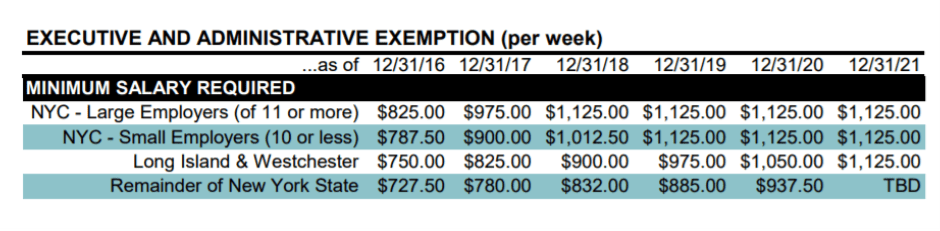


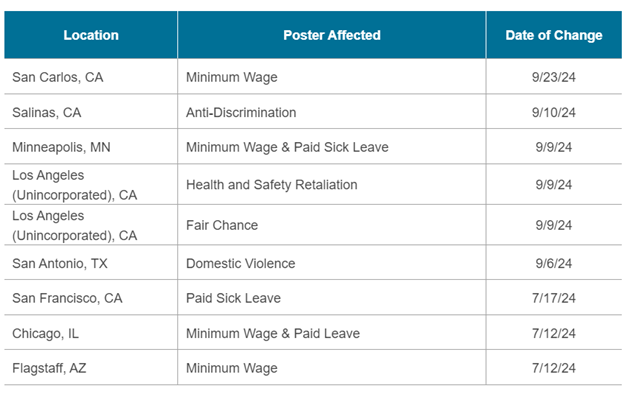


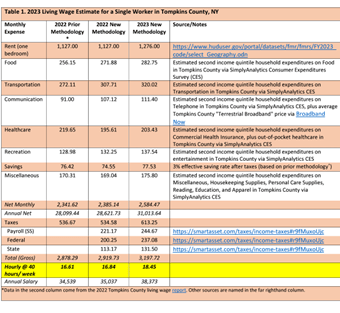

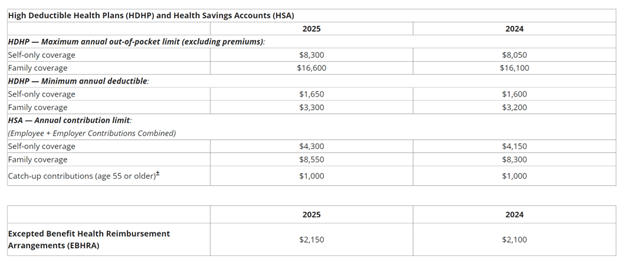


 BURR CONSULTING, LLC